UNILAG, UK Varsity Launch Joint AI Digital Media Degrees
By Sherif Salau
The University of Lagos and the University of Birmingham in the United Kingdom have formally launched two joint postgraduate programmes that will allow students to earn dual degrees in artificial intelligence (AI) and digital media without leaving Lagos.
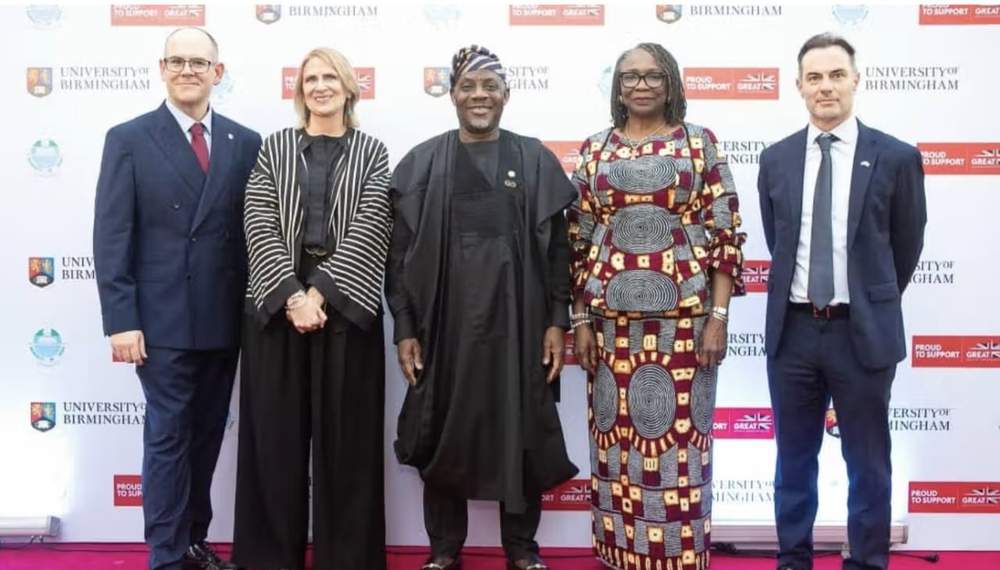
The programmes—a one-year Master of Science in Artificial Intelligence and Data Technologies and a Master of Arts in Digital Media and Communications—were unveiled in the presence of Education Minister Dr Maruf Tunji Alausa, UNILAG Vice-Chancellor Professor Folasade Ogunsola, and Birmingham’s Provost and Vice-Principal, Professor Nick Vaughan-Williams. Teaching is scheduled to begin in September 2027.
The partnership builds on a Memorandum of Understanding signed by the two universities in January. Delivered through a transnational education framework based in Lagos, the degrees are designed to combine Birmingham’s research strength with UNILAG’s understanding of local needs. Graduates will receive qualifications from both institutions.
The MSc programme will cover machine learning, deep learning, computer vision, large language models, data management and AI ethics. Its aim is to equip students with technical and analytical skills applicable to financial technology, healthcare innovation, business analytics and other data-driven fields. The MA in Digital Media and Communications will examine digital cultures, questions of power and identity, media ethics, research methods, content creation and broadcasting, preparing graduates for careers in journalism, digital communications and related industries.
Officials on both sides described the collaboration as a response to two pressing realities: the high cost of studying abroad and the growing demand for advanced skills in artificial intelligence and digital media. By offering internationally recognised qualifications in Nigeria, the partnership seeks to expand access, reduce foreign education spending and help retain talent within the domestic economy. Plans are already being considered to introduce bachelor’s degree programmes in market-relevant fields in subsequent years.
Minister Alausa called the launch a milestone for Nigeria’s tertiary education sector and linked it to broader efforts to strengthen universities and expand quality opportunities under the government’s education renewal agenda. British officials present noted that the programmes demonstrate how UK and Nigerian universities can work together to deliver education that matches the needs of a rapidly changing economy.
For prospective students, the offer is practical as well as academic. They will study in Lagos, under a jointly developed curriculum, and emerge with credentials from both a leading Nigerian university and a research-intensive British institution. In fields where global standards and local application increasingly intersect, that dual foundation may prove especially valuable.
The true measure of the partnership will come when the first cohort begins classes in 2027 and, later, when graduates enter the workforce. For now, the launch signals a clear intention: to bring high-quality, future-oriented postgraduate education closer to home while strengthening the academic ties between Nigeria and the United Kingdom.