Inside Lagos’ Plan to Turn Somolu Hospital Into Specialist Healthcare Hub
Kehinde Adeleye
The Lagos State Government is repositioning the new Somolu General Hospital as a Head and Neck Super-Specialty Centre, with the facility expected to provide advanced care for conditions affecting the ear, nose, throat, eyes, mouth, face and neck, while retaining essential general medical services.
The planned 180-bed, seven-floor hospital is part of Lagos’ broader strategy to transform selected general hospitals into centres of excellence with designated areas of specialisation.
The Commissioner for Health, Prof. Akin Abayomi, disclosed this during an inspection tour of the Somolu and Ojo hospital projects alongside the Special Adviser to the Governor on Works, Dr Adekunle Olayinka, and other officials.
According to Abayomi, the Somolu facility will specialise in Plastic Surgery, Maxillofacial Surgery, Ear, Nose and Throat, Ophthalmology and Dentistry.
It will also provide Medicine, Surgery, Paediatrics and Obstetrics and Gynaecology.
What Lagos is trying to achieve
The government’s plan goes beyond adding another general hospital to Lagos’ healthcare network.
By giving Somolu a defined specialist role, the state wants residents requiring more complex medical interventions to have access to specialised treatment within Lagos instead of travelling to other states or abroad.
Abayomi said the strategy was part of the state’s long-term effort to reduce outbound medical tourism.
“Over the next five to 10 years, we believe that every kind of medical intervention will be available in Lagos in both the public and the private sector, so that outbound medical tourism will stop, and in fact, it will reverse,” he said.
Who will benefit?
The immediate beneficiaries will be residents of Somolu and neighbouring communities, particularly patients requiring specialist treatment involving the head, neck, eyes, ears, nose, throat, mouth, jaw and face.
Abayomi disclosed that the existing Somolu General Hospital has about 107,000 registered patients, while its wider catchment population is estimated at between 5 million and 10 million people.
The new facility could therefore serve a much wider population once operational, providing additional capacity for specialist referrals and complex cases.
Why a new hospital?
The government said it opted to construct a new hospital rather than upgrade the existing 60-bed Somolu General Hospital because of the large population it serves and the limitations of the current structure.
“Instead of upgrading it, we decided to build a brand-new Somolu Hospital,” Abayomi said.
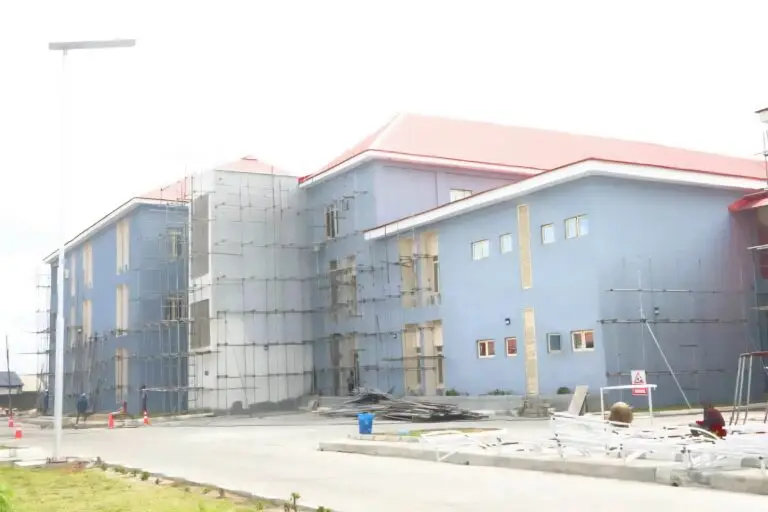
The new hospital is being constructed on the former Somolu Local Government headquarters site.
Construction has reached about 15 per cent, with completion targeted for the third quarter of 2027.
The existing hospital will continue operating until the new facility is completed and commissioned. It will subsequently be demolished, with the site expected to be redeveloped for parking and other support services.
Lagos is also adding 460 hospital beds
The Somolu project is being developed alongside the 280-bed Ojo General Hospital, bringing the combined additional capacity from the two projects to 460 beds.
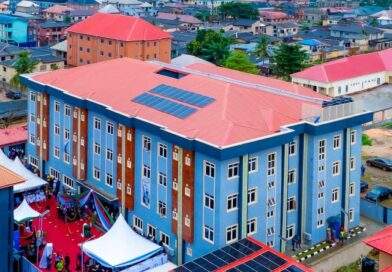
The Ojo hospital is significantly further along, with construction reaching about 85 per cent completion.
Abayomi said the project had entered its finishing stage, with high-tech medical equipment and furniture already ordered. It is expected to be ready for commissioning by the end of 2026 or early 2027.
Green hospitals
The two facilities are also being designed with energy-efficient and environmentally sustainable systems.
The government said the projects would feature renewable energy systems, solar power, low-carbon technologies, water catchment systems, improved sewage management and stronger infection prevention and control measures.
Olayinka said the solar installation at Ojo had met the required specifications and would provide an alternative power source when the hospital becomes operational.
He added that construction challenges at Somolu had been resolved and that work was progressing.
What residents should expect
If delivered as planned, the new Somolu hospital could mean more specialist services, additional hospital beds, modern facilities and improved access to complex medical care for residents.
However, the success of the project will ultimately depend not only on the building but also on the availability of specialist doctors, nurses, diagnostic equipment, medicines, functional theatres, reliable power, maintenance and affordable treatment.
For Lagos, the larger ambition is clear: build a network of specialised public hospitals capable of handling increasingly complex cases locally and reduce the number of residents seeking medical treatment outside the state or country.