Beyond 9-to-5: Lagos Youths Turning Creativity Into Careers
For a growing number of young people in Lagos, the dream job no longer comes with a corner office, a monthly salary or a corporate title.
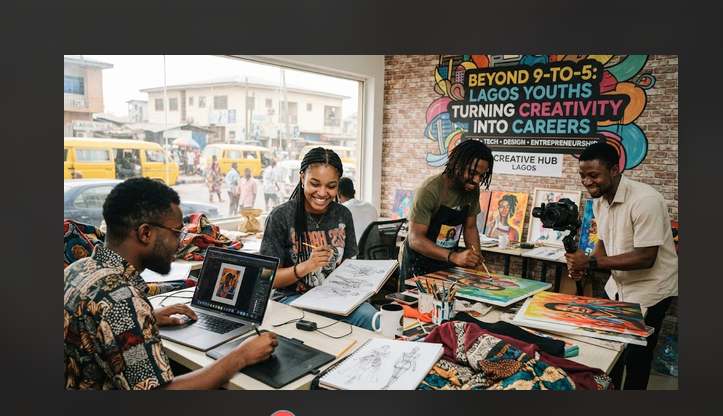
Instead, it begins with a camera slung over the shoulder, a sewing machine in a modest studio, a makeup kit, or a laptop running editing software.
As unemployment, inflation and a fiercely competitive job market continue to reshape career choices, thousands of young Lagosians are rejecting the traditional white-collar path and building successful businesses around their creative talents. What was once considered a side hustle has evolved into a thriving industry that is creating jobs, attracting investment and redefining what success looks like for Nigeria’s younger generation.
From photographers documenting weddings and concerts to fashion designers creating homegrown brands, makeup artists serving celebrities and entrepreneurs, video editors producing viral content, and social media managers helping businesses connect with customers, the city’s creative economy has become one of its most vibrant sources of employment.
Lagos, Nigeria’s commercial and entertainment powerhouse, has emerged as the epicentre of this creative revolution. The continued growth of Nollywood, Afrobeats, digital media, fashion and influencer marketing has created unprecedented demand for professionals working behind the scenes to produce compelling visual content and digital campaigns.
For 27-year-old photographer Daniel Adeyemi, success came one snapshot at a time. After borrowing a friend’s camera while at university, he gradually built a portfolio through referrals and social media until photography became his full-time profession.
“There were days when I had no bookings and wondered if I had made the right decision,” he says. “Today, most of my clients come from recommendations online. Every event I cover opens the door to another opportunity.”
His story mirrors that of many young photographers who have transformed Instagram, TikTok and other social platforms into virtual storefronts, allowing their work to reach audiences far beyond Lagos.
Fashion entrepreneur Esther Akinola has experienced a similar transformation. Working from a small studio in Surulere, she has grown her clothing label by combining quality craftsmanship with consistent online branding.
“People are buying into brands, not just clothes,” she explains. “Social media has made it possible for a small designer to compete with established names. If your designs stand out and your online presence is strong, customers will find you.”
The rise of Nigerian fashion on global runways and international digital marketplaces has further expanded opportunities for emerging designers, many of whom now sell directly to customers through social commerce platforms.
The beauty industry has also become a major employer for young creatives. Professional makeup artist Rachael Bello says demand has expanded well beyond bridal services.
“These days, almost everyone needs professional makeup at some point,” she says. “Content creators, entrepreneurs, television presenters and even job applicants want polished looks for branding and professional photographs. It’s no longer just about weddings.”
Behind every viral video, successful marketing campaign or trending online challenge is another group of professionals quietly shaping Nigeria’s digital economy—video editors and social media managers.
Twenty-six-year-old video editor Ibrahim Yusuf spends long hours turning raw footage into engaging short-form content for brands, influencers and media companies.
“Editing today isn’t just about cutting clips together,” he explains. “Clients expect storytelling, visual effects and content that’s optimised for different platforms. You have to understand both creativity and technology.”
As businesses increasingly rely on digital platforms to reach customers, social media managers have become indispensable, overseeing everything from content strategy and audience engagement to online advertising and brand reputation.
Recognising the sector’s growing economic importance, the Lagos State Government has intensified efforts to support the creative industry through training, innovation and youth empowerment initiatives. One of its flagship programmes, the Eko Studio Culture Scheme, recently graduated hundreds of young creatives equipped with practical skills, professional tools and financial support to launch careers in music production, sound engineering and other creative disciplines.
Industry experts believe the next phase of growth will be driven by innovation. With artificial intelligence, digital marketing and content creation evolving rapidly, creatives who continue to learn new skills and embrace emerging technologies are expected to enjoy greater opportunities both locally and internationally.
The journey, however, is not without its obstacles. Frequent power outages, expensive equipment, rising operating costs and limited access to finance remain major challenges for many young entrepreneurs trying to grow their businesses.
Yet, despite these hurdles, optimism remains strong.
Across Lagos, countless young people are proving that creativity is more than artistic expression—it is a powerful economic tool capable of generating income, creating employment and transforming lives.
In a city where ambition meets innovation every day, cameras, sewing machines, makeup brushes and laptops have become the new instruments of enterprise. For this generation, success is no longer measured by securing a desk in a corporate office, but by building brands, telling stories and creating opportunities through imagination and determination.