Lagos Tops Fiscal Performance Report
Kehinde Adeleye
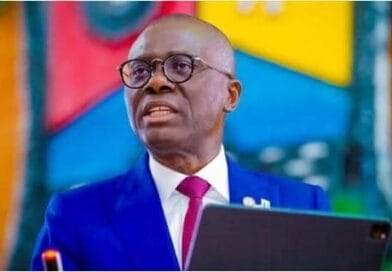
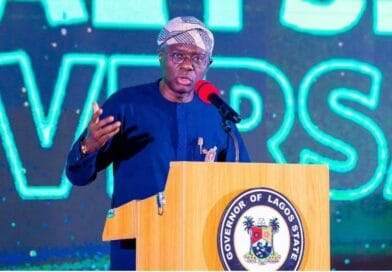
Lagos State has emerged as Nigeria’s best-performing state in fiscal management in 2026, while Enugu recorded a 125.91 per cent increase in internally generated revenue (IGR), according to the latest State of States Report released by BudgIT.
The 11th edition of the report assessed the 2025 fiscal performance of 35 states, examining their revenue generation capacity, expenditure efficiency, debt sustainability, fiscal viability and investment in critical development sectors.
The report, themed *“From Allocation to Impact: Rethinking State Spending Priorities,”* excluded Rivers State from the assessment because it had yet to publish its audited financial statements and budget implementation reports following the declaration of a state of emergency in 2025.
Lagos secured the first position nationally, supported by its diversified revenue base and increased revenue generation. The state recorded an IGR of ₦1.71 trillion in 2025, representing a 35.67 per cent increase from the ₦1.26 trillion generated in 2024.
Enugu recorded the second-highest IGR growth, with its revenue rising by 125.91 per cent from ₦180.5 billion to ₦407.76 billion.
Oyo and Gombe also recorded significant increases of 112.79 per cent and 111.28 per cent, respectively, while Abia and Akwa Ibom posted growth rates of 64.48 per cent and 45.11 per cent.
Kebbi emerged as the fifth-best-performing state in the overall fiscal ranking after recording a 59.54 per cent increase in total revenue to ₦228 billion.
However, BudgIT cautioned that increased revenue generation does not automatically translate into improved public services, stressing that the quality of government spending and its impact on citizens remain important measures of fiscal performance.
At the lower end of the ranking, Yobe placed 25th, Ekiti 26th, Sokoto 27th, Kaduna 29th, Adamawa 30th and Osun 32nd.
The report identified weak domestic revenue mobilisation, rising expenditure commitments and debt-related vulnerabilities as major challenges confronting several states.
It particularly raised concerns about Kaduna’s growing debt burden and Sokoto’s poor performance in revenue generation and spending on critical development sectors.
On the composition of revenue, BudgIT noted that Enugu’s impressive IGR growth was largely driven by non-tax receipts, which accounted for 90.79 per cent of the absolute increase, raising questions about the sustainability of the state’s revenue expansion.
Yobe and Ebonyi also remained constrained by weak domestic revenue generation, recording IGR of ₦13.35 billion and ₦21.9 billion, respectively.
The report further highlighted the continued dependence of state governments on allocations from the Federation Account Allocation Committee (FAAC).
While Lagos generated total revenue of ₦2.68 trillion, FAAC transfers accounted for approximately 90 per cent of Akwa Ibom’s recurrent revenue, 86.47 per cent in Anambra and 82.90 per cent in Abia.
In Kano, statutory transfers represented 79.28 per cent of recurrent revenue, highlighting the limited progress made by several states towards fiscal independence.
On expenditure, Lagos recorded a 33.24 per cent increase in total spending to ₦3.16 trillion, while Oyo’s expenditure rose by 118.71 per cent to ₦978.64 billion.
Enugu’s spending increased by 84.80 per cent to ₦880.57 billion, while Abia recorded a 44.37 per cent rise to ₦458.95 billion.
BudgIT, however, warned that rapid growth in government spending could undermine fiscal discipline, particularly where expenditure increases faster than revenue.
Lagos also recorded operating expenses of ₦1.29 trillion, representing a 23.89 per cent increase, while Oyo’s operating costs rose by 88.85 per cent to ₦372.68 billion.
In Abia, operating expenses nearly doubled to ₦126.68 billion, partly driven by a 197.07 per cent increase in overhead costs to ₦70.87 billion.
Consequently, the state’s IGR covered only 53.56 per cent of its operating expenses in 2025, compared with 64.28 per cent in 2024.
On capital expenditure, Lagos increased its spending by 46.69 per cent to ₦1.58 trillion, while Enugu more than doubled its capital outlay to ₦693.88 billion.
Akwa Ibom’s capital expenditure rose by approximately 85 per cent to ₦970.83 billion, while Oyo more than doubled its capital spending to ₦423 billion.
Despite the increases, BudgIT stressed that higher capital expenditure should not automatically be interpreted as improved development, noting that project execution, spending priorities and benefits to citizens must also be considered.
On debt sustainability, Lagos recorded a total debt stock of approximately ₦2.90 trillion at the end of 2025, while Ogun’s debt rose to ₦538.92 billion, making it the fourth most indebted state in the assessment.
Enugu’s debt increased by 18.98 per cent to ₦300.95 billion, alongside a fiscal deficit of ₦110.95 billion.
Abia and Anambra, however, reduced their total debt stocks by 8.86 per cent and 15.49 per cent, respectively.
The report also identified foreign currency exposure as a major debt risk, accounting for 76.06 per cent of Abia’s debt, 92.73 per cent of Anambra’s and 93.48 per cent of Ondo’s total debt.
Osun spent ₦100.17 billion on debt servicing, representing 28.60 per cent of its total revenue, while Ebonyi’s debt servicing obligations stood at ₦42.51 billion, equivalent to 15.99 per cent of its revenue.
BudgIT noted that Ebonyi’s debt servicing costs were almost twice its IGR, while the state also reported ₦43.32 billion in outstanding contractor arrears.
Commenting on the findings, BudgIT’s Head of Research and Policy Advisory, Engr. Adejoke Akinbode, said increased public revenue offered states an opportunity to accelerate development but maintained that fiscal performance should be measured by the quality of expenditure.
She said state governments must demonstrate that additional resources were translating into better healthcare, improved education, productive infrastructure and essential services that improve the living conditions of citizens.
The 2026 edition introduced a revised assessment methodology, allocating 40 per cent to revenue performance, 30 per cent to fiscal viability, 15 per cent to debt sustainability and 15 per cent to spending in critical sectors.
The critical-sector assessment covers agriculture, healthcare, education, and water, sanitation and hygiene, with emphasis on actual expenditure and budget implementation.
BudgIT urged state governments to strengthen domestic revenue institutions, adopt realistic revenue projections, improve budget credibility and prioritise investments capable of delivering measurable development outcomes.
It also called for greater transparency and accountability in public spending, warning against excessive administrative costs at the expense of productive investments.
The organisation maintained that the ultimate measure of fiscal performance should be the extent to which public resources improve citizens’ welfare rather than the volume of government allocations or expenditure.