
Hamzat’s Five Agenda for Transforming Lagos’ Transportation System
Hamzat’s Five Agenda for Transforming Lagos’ Transportation System
For many Lagos residents, getting to work, school, business appointments or even returning home after a long day can be an exhausting experience. Hours lost in traffic often mean less time for family, reduced productivity and increased transportation costs.
It is this daily struggle that Lagos State Deputy Governor and All Progressives Congress (APC) governorship candidate, Dr. Kadri Obafemi Hamzat, says he wants to address through an integrated transportation system that connects roads, railways and waterways.
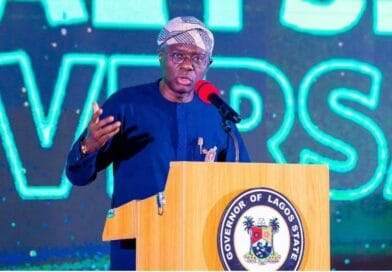
Hamzat, who spoke on Tuesday during separate interviews with Lagos Television (LTV), Eko FM 107.5 FM and Lagos Traffic Radio 96.1 FM at Agidingbi, promised to improve public transportation, reduce congestion and make movement across the state less stressful if elected governor.
His proposal focuses not only on expanding transport infrastructure but also on making existing and planned systems work together to give commuters more reliable alternatives to road travel.
“Our transportation system is what I prescribed to link all resources in Lagos. For us, moving our people easily without traffic is essential because this is the bedrock of everything,” he said.
According to him, transportation affects virtually every aspect of life in Lagos, from access to housing and education to the ease of doing business and youth development.
The implication, he said, is that an inefficient transport system does more than delay commuters; it also limits economic opportunities and affects the quality of life of residents.
More BRT buses, less waiting
As part of his proposed intervention, Hamzat pledged to provide more Bus Rapid Transit (BRT) buses, decongest bus stops and improve the state’s response to road accidents.
For commuters who spend long periods waiting for buses or struggle to board vehicles during rush hours, these measures could make a difference if effectively implemented.
He argued that building more roads alone would not solve Lagos’ traffic problems, stressing that the state needed a combination of efficient public transportation, better traffic management and coordinated responses to incidents on major roads.
Hamzat also highlighted the need for security and traffic management personnel to respond quickly when accidents occur or road repairs disrupt movement.
In a city where a single accident or breakdown can trigger long queues, he said, a prompt response would help prevent congestion from spreading to adjoining roads.
Lagos’ high volume of vehicles, he added, makes better organisation and planning essential to managing traffic.
Blue Line extension to bring relief to commuters
One of the major components of Hamzat’s transportation plan is the extension of the Lagos Blue Line rail service to Okokomaiko and its proposed connection with the Red Line at the National Theatre in Iganmu.
The planned connection is expected to improve movement between different parts of the state and expand the number of residents who can access rail transportation.
Hamzat said commuters travelling from areas such as Yaba and Agege would benefit from improved connections to Marina, while residents along the Okokomaiko corridor, including students of Lagos State University (LASU), would have better access to rail services.
For residents who currently depend heavily on road transport, a more connected rail network could provide an alternative to spending hours in traffic, particularly during peak periods.
However, the benefits will ultimately depend on the timely delivery of the extension, convenient connections between transport modes and services that commuters can afford and rely on.
Lagos waterways: An alternative route out of traffic
Hamzat also wants Lagos to make greater use of its waterways, arguing that the state’s geography offers an opportunity to move more people by water instead of relying predominantly on roads.
He cited the Omi-Eko project, which is expected to provide seven electric ferries, five of which he said had already been delivered.
The initiative is intended to expand water transportation and provide another option for residents travelling between communities connected by the lagoon and other waterways.
“Lagos is a water state, and as such, we must utilise the lagoon as a network of water routes so that at least we can move a lot of our people on water as we are moving on roads, and of course on rail too,” he said.
If properly integrated with road and rail services, water transportation could help reduce pressure on busy roads while offering commuters alternative routes to their destinations.
For such a system to attract more passengers, however, reliable ferry schedules, accessible terminals, affordable fares and convenient connections with buses and trains would be important.
Fourth Mainland Bridge: Private investment in focus
On the proposed Fourth Mainland Bridge, Hamzat expressed confidence that the project could be delivered through partnerships with private-sector investors.
He said the bridge’s design and costing had involved private-sector participation and that discussions had been held with prospective concessionaires.
However, he cautioned against excessive borrowing to finance major infrastructure projects, arguing that the state must carefully consider its financial obligations when undertaking projects of such magnitude.
“We must build it through partnerships, and we also need to be careful as a state in terms of borrowing,” he said.
Hamzat explained that public-private partnerships would require a clear understanding of the responsibilities of government and investors, including tolling arrangements that could enable private-sector participants to recover their investments.
The approach, he suggested, would allow the government to pursue major infrastructure projects while being mindful of the financial burden on the state.
The challenge of turning promises into shorter journeys
Beyond the proposed rail extension, additional buses, electric ferries and bridge project, Hamzat’s transportation agenda raises a central question for Lagos residents: how quickly will these plans translate into less time spent on the road?
For workers who leave home before dawn, traders moving goods between markets, parents taking children to school and students travelling to lectures, the success of any transport policy will ultimately be measured by the time and money it saves them.
A genuinely integrated system would require more than separate roads, rail lines and ferry services. It would also need coordinated routes, accessible interchanges, reliable schedules, effective traffic enforcement and a prompt response to accidents and breakdowns.
Hamzat said his proposed approach would focus on linking transport systems, improving commuter access and reducing travel delays to support productivity and economic growth.
His pledge places transportation at the centre of his vision for Lagos, with the promise that better connectivity could ease one of the daily pressures of living and working in Nigeria’s commercial capital.
For commuters, the expectation is straightforward: less time in traffic, fewer delays and more time for work, family and other essential activities.
Whether the proposed measures can deliver that relief will depend on implementation, funding, coordination and the ability to make public transportation a dependable choice for more Lagos residents.