Lagos Island Residents Decry Neglect As Abandoned Ojo Giwa Street Becomes Dumpsite
By Sherif Salau
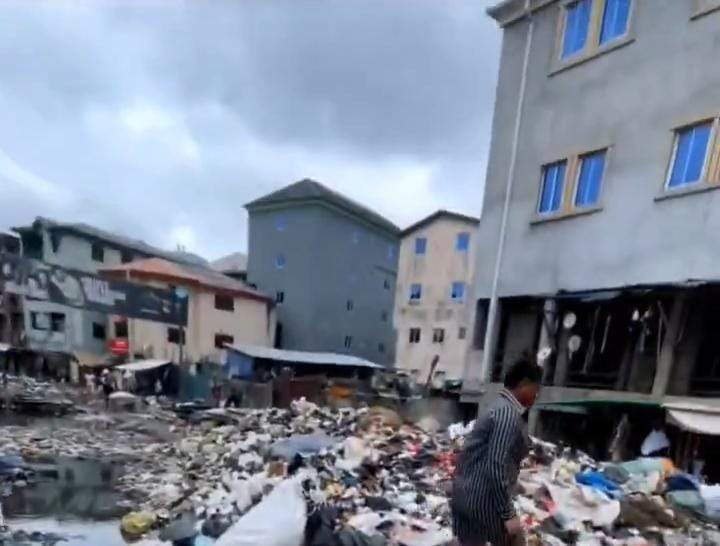
Residents and business owners along Ojo Giwa Street in Lagos Island Local Government Area have raised concerns over the deteriorating condition of their community, as the abandoned street has reportedly been turned into a dumpsite.
The situation has heightened concerns over public health, environmental sanitation and the quality of life of residents, who are calling for urgent government intervention. They question the continued neglect of their neighbourhood despite the huge revenue reportedly generated by Lagos State, appealing to the authorities to restore the street and provide a cleaner, safer and healthier environment for all.
Traders who once opened their shops each morning now speak of abandoned storefronts and restricted movement. Families living along the stretch describe a daily struggle with foul odours, mosquitoes, and the constant fear that the next heavy rain will push the stagnant water closer to their homes. The problem, they insist, did not appear overnight. It grew from months of unanswered complaints about the collapsed state of the road and the absence of regular waste collection.
“This place has been left for too long,” one long-time resident said, gesturing toward the heaps of refuse and the pools of dark water that still mark sections of the street. “We raised the alarm. Nothing changed until the media came. Even now, the response feels incomplete.”
Local accounts describe how the street became overtaken by standing water after prolonged neglect of its drainage and surface. Traders and residents say the conditions forced some to close shops or leave temporarily because of health concerns and the difficulty of moving goods or vehicles. When the Lagos State Government finally responded—following public attention—contractors began sand-filling parts of the road. Residents quickly raised new worries: the stagnant water was not fully evacuated first, they claimed, and the filling work has only redirected the problem toward residential buildings. Half the street, according to those living there, remains difficult to access.
The situation on Ojo Giwa Street reflects a wider pattern familiar across parts of Lagos Island and the broader metropolis. Narrow streets, dense commercial activity, and strained waste-collection systems have left many corridors vulnerable to illegal dumping. Road medians, bus stops, and abandoned stretches often become convenient, if unofficial, disposal points when Private Sector Participation operators face delays, fuel costs, or limited access to distant dumpsites. On the Island, where pedestrian traffic is heavy and drainage channels are easily blocked, the consequences appear quickly: foul smells, blocked pathways, and rising public-health anxiety.
Residents of Ojo Giwa Street say they are not asking for miracles. They want the remaining water drained properly, the road completed, and a reliable system that prevents the street from sliding back into refuse and floodwater. Some acknowledge that government officials, including the Commissioner for the Environment and Water Resources, have visited and given assurances. Yet the gap between inspection and lasting solution remains the source of their frustration.
In a city that generates thousands of tonnes of waste daily and where infrastructure struggles to keep pace with population and commercial pressure, streets like Ojo Giwa become visible symptoms of deeper strain. For the people who live there, the issue is more immediate. It is about being able to open a shop without stepping through refuse, to walk home without holding their breath, and to believe that an abandoned road will not be allowed to become a permanent dumpsite.
Until the drainage is fixed, the waste cleared, and the street fully restored, the residents of Ojo Giwa Street say they will continue to raise their voices. Neglect, they argue, is not an abstract policy failure. It is the water at their doorsteps and the refuse that now defines the place they call home.