After Viral Complaints, What LASCOPA’s CWAY Inspection Means for Lagos Residents
Kehinde Adeleye
Lagos residents who buy bottled water have been advised to pay attention to how packaged water is handled, transported and stored after the Lagos State Consumer Protection Agency (LASCOPA) inspected the production facility of CWAY.
The inspection followed a viral social media video and complaints from consumers concerning the company’s products. LASCOPA said the exercise was carried out to assess CWAY’s production, packaging, transportation, storage and distribution processes.
For consumers, the inspection raises questions beyond the condition of the water at the point of production. How bottles are cleaned and maintained, how long they remain in circulation and how they are transported and stored can also affect consumer safety.
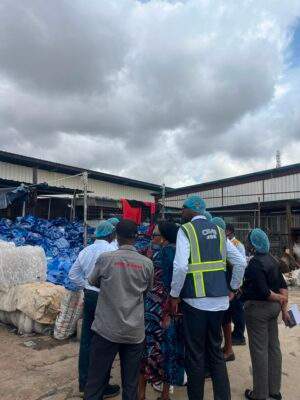
During the inspection, LASCOPA officials examined the bottle filling, capping, labelling and preparation of products for distribution. They also reviewed the company’s packaging, transportation and storage procedures.
The agency observed some plastic packaging materials that had already been separated for disposal because they were considered unsuitable for use.
CWAY told the inspectors that the discarded bottles are processed through a grinding machine and sold to plastic industries as raw materials. Company records reportedly showed that about 1,000 bottles are discarded daily.
Importantly, LASCOPA did not state that the discarded bottles were contaminated or that CWAY’s bottled water had been found unsafe for consumption. The inspection instead resulted in recommendations aimed at strengthening packaging and handling standards.
Why bottle condition matters to consumers
LASCOPA’s Director of Scientific Investigation, Research and Development, Suluka Raheem, advised CWAY to ensure that packaging materials are properly cleaned, maintained and fit for use.
He also recommended that suitable handles be incorporated into the bottles to reduce slippage and make them safer to handle.
The agency further asked the company to establish a defined shelf-life for its bottles and withdraw them from circulation once that period expires, regardless of whether the bottles show visible damage.
For residents, the recommendation highlights the importance of the condition of the container in which drinking water is supplied, rather than focusing only on the water itself.
Health concerns around storage and transportation
LASCOPA also raised concerns about what happens to bottled water after it leaves the production facility.
Raheem urged CWAY to strengthen training and sensitisation for distributors on proper handling and storage, particularly warning against exposing the products to direct sunlight during transportation.
This is significant for consumers because bottled water can spend time in warehouses, delivery vehicles, shops and roadside outlets before it reaches the person who eventually drinks it.
The agency therefore urged CWAY to adopt internationally recognised standards for the transportation, distribution and storage of its products.
What should Lagos residents do?
The inspection does not mean residents have been told to stop drinking CWAY water. LASCOPA’s publicly reported findings did not establish that the company’s water was contaminated or unsafe.
However, consumers can take practical precautions when buying bottled water.
Residents should check that bottles are properly sealed and that the packaging is not visibly damaged, excessively worn or compromised. They should also avoid products that have been stored under conditions that appear unsuitable, particularly prolonged exposure to intense sunlight.
LASCOPA’s intervention also puts responsibility on distributors and retailers to ensure that packaged water is stored and handled properly before it reaches consumers.
Why the inspection matters
LASCOPA’s role is to protect consumers and investigate complaints involving products sold in Lagos State. The agency says its inspection was conducted as part of that responsibility following the concerns raised about CWAY products.
The agency has now asked CWAY to address the observations made during the inspection and implement its recommendations.
For Lagos residents, the immediate issue is therefore not simply whether a particular bottle of water is safe to drink, but whether the entire chain from production to distribution is being properly controlled.
As the state consumer protection agency continues to monitor the matter, consumers are encouraged to remain observant and report concerns about products they believe may pose a risk to their health or safety.