147 Lagos structures face impact as Coastal Highway service lane advances
By Emmanuel Daniji
For some Lagos residents, the Lagos-Calabar Coastal Highway is more than a massive infrastructure project. It is a road being built close to their homes, businesses and properties — and for 147 structures along the Lagos corridor, the project is now expected to have a direct impact.
The Federal Government has disclosed that 147 structures in Lagos will be affected by the construction of the highway’s service lane, although only five have been earmarked for complete demolition.
The remaining 142 structures are expected to experience what the government described as minimal impact from the construction.
President Bola Tinubu made the disclosure during a stakeholder engagement in Lagos held alongside the flag-off of rehabilitation works on the Eko and Marine bridges and repairs to a flood-damaged section of the Lagos-Ibadan Expressway.
The announcement has brought the human side of the Coastal Highway project into sharper focus.
For property owners whose buildings fall within the affected areas, the issue is not simply about a new road. It is about homes, businesses, investments and what happens to them as construction progresses.
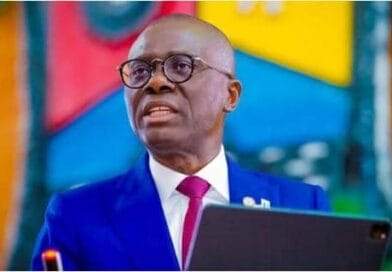
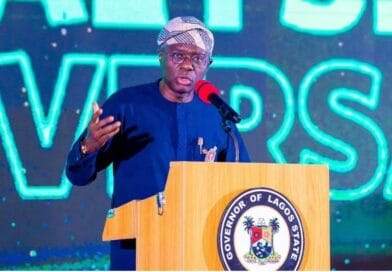
Tinubu, who was represented at the event by Lagos State Governor Babajide Sanwo-Olu, assured affected property owners that the Federal Government would provide compensation where applicable.
He urged those affected to remain patient, saying the compensation would be provided at the appropriate time.
The 147 structures were identified during the stakeholder engagement by a representative of the AEC consortium involved in the project.
Further details reported from the engagement show that the affected structures include properties that would only be partially impacted by the proposed service lane, rather than demolished completely.
The distinction is important for residents along the route because being listed as an affected structure does not necessarily mean the entire building will be pulled down.
According to details presented on the project, 97 structures on one side of the highway and another 50 on the coastal side are expected to be partially affected, while five structures face complete demolition.
The government has also said that the alignment of some sections was adjusted to reduce the number of properties that would be affected.
One such adjustment involved a detour through Edward Otonu Street, which was approved to avoid the demolition of 17 structures. Another alignment change was reportedly made around Meadow Old Way to protect a major high-rise investment.
But for those still within the affected areas, compensation remains a major concern.
The Minister of Works, David Umahi, said the enumeration of affected properties and economic crops would be submitted for approval and gazetting before compensation begins. The Nation reported that Umahi said funds for compensation were already available.
Beyond the property concerns, the Federal Government says the service lanes are being constructed to solve practical problems around the Coastal Highway.
The proposed lanes are expected to improve access for communities along the corridor while helping to control entry onto the main highway. They are also being linked to a secondary drainage system intended to address flooding in adjoining communities.
Project engineers said surveys had been carried out on several drainage outfalls, including Kuramo Waters, Nike Art Gallery, Silverbird, Mayegun, Muri Okunola, Agbonbon and Ikota, as part of the drainage design.
For residents, therefore, the project presents two sides of the same story.
There is the promise of better roads, improved drainage, easier movement and stronger infrastructure. But there is also the immediate reality for property owners whose buildings have been placed within the project’s path.
Tinubu appealed to Lagos residents and other stakeholders to cooperate with the government, arguing that infrastructure projects must sometimes require people to make adjustments for the benefit of future generations.
The Federal Government has also said it remains open to constructive criticism while urging stakeholders to support projects that are properly planned and executed.
As construction advances, however, the attention of the 147 affected property owners is likely to remain firmly fixed on one question: what exactly will happen to their properties, and when will the promised compensation reach them?
For them, the Coastal Highway is no longer simply a road connecting Lagos to the wider coastal corridor. It is a project arriving at their doorstep.