Nigeria’s $1.25bn World Bank Deal: What It Means for Jobs
For a young Nigerian sending out CVs with little response, a small business owner battling high operating costs or a farmer struggling with rising production expenses, the announcement of another billion-dollar financing package may sound distant.
But the latest $1.25 billion World Bank facility for Nigeria could have consequences far beyond government offices and economic policy meetings, if the reforms it supports translate into real opportunities.
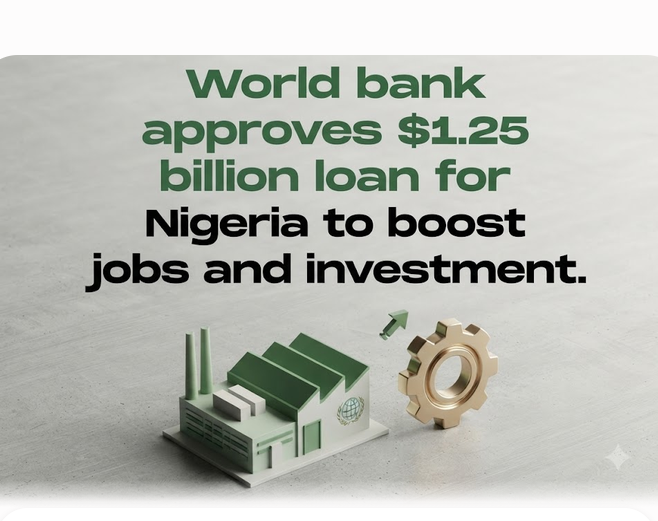
Approved under the Nigeria Actions for Investment and Jobs Acceleration (NAIJA) programme, the financing is aimed at helping Nigeria attract more private investment, strengthen businesses and create jobs.
The bigger idea is to tackle some of the obstacles that have continued to make it difficult for companies to invest, expand and employ more Nigerians.
The programme is expected to support reforms in areas including access to finance, electricity, digital services, capital markets, trade, agriculture and domestic revenue mobilisation.
For a graduate searching for a first job, the impact could eventually show up when a growing company decides to open another branch and needs new workers.
For a small business owner, better access to funding and more reliable electricity could mean the difference between surviving month to month and actually expanding.
For farmers, improved agricultural systems and stronger connections to markets could help increase production and reduce some of the pressures that eat into their earnings.
The World Bank’s broader 2026–2032 partnership framework with Nigeria also has ambitious targets, including expanding electricity access to 32 million people, increasing broadband connectivity for 58 million people and improving agricultural productivity for 9.5 million farmers.
Yet, for Nigerians already feeling the weight of economic hardship, the announcement naturally comes with expectations — and questions.
The country is borrowing the money, which means it will eventually have to be repaid. Nigerians will therefore be looking beyond the headline figure to see whether the facility delivers tangible economic benefits or simply adds another layer to the country’s debt obligations.
The real measure of success will not be how quickly the $1.25 billion is announced or disbursed.
It will be whether businesses actually grow, whether new jobs are created, whether electricity becomes more reliable, whether entrepreneurs gain easier access to capital and whether more Nigerian households begin to feel the benefits of economic growth.
For the millions of people waiting for the economy to work better for them, the most important question is no longer how much Nigeria has secured, but how much of the opportunity eventually reaches their streets, businesses and homes.