LASG Advocates For Improved AI Usage To Disseminate Communication
By Saheed Afolabi
The Lagos State Government has called for improved use of Artificial Intelligence (AI) to strengthen public communication, with Commissioner for Information and Strategy, Mr. Gbenga Omotoso, urging senior communication managers to embrace emerging technologies.
Omotoso noted that AI can help disseminate government information more quickly, efficiently and accurately, while also enabling better responses to citizens’ needs.
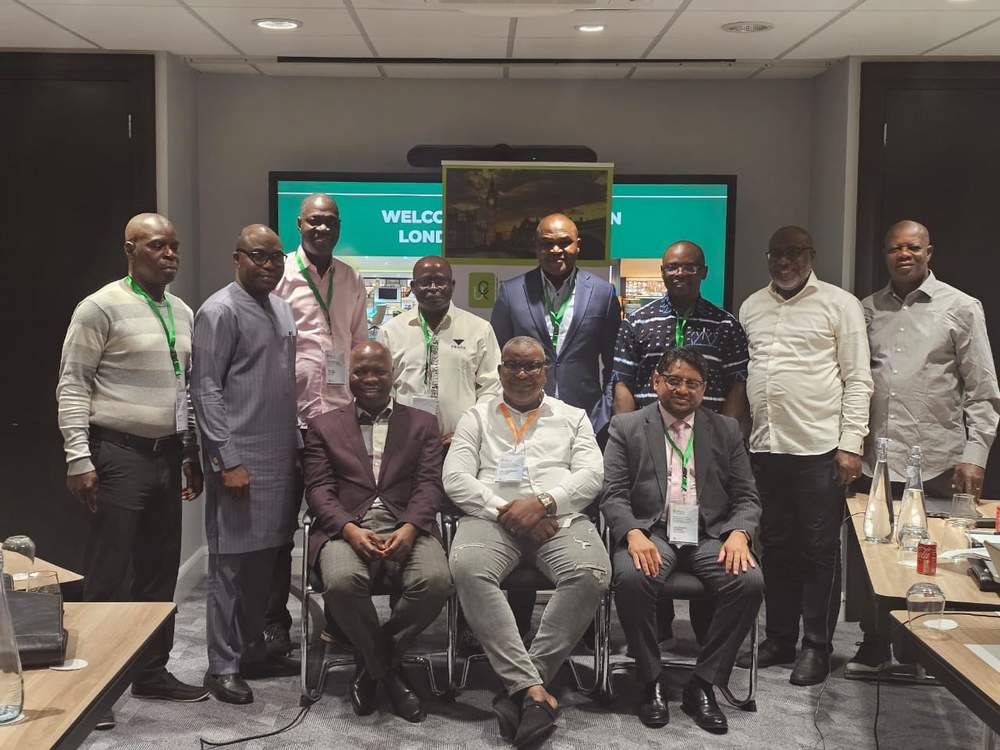
The call came after a five-day international workshop themed “Strategic Public Service Communication Dynamics: Empowering Public Sector Leaders,” held at the Holiday Inn on Coram Street in Central London.
The training brought together senior public communication managers from Lagos and Plateau States. Participants gained practical AI skills and strategic tools focused on improving the communication of government policies, programmes and services, as well as enhancing citizen engagement, digital innovation and public trust.
They worked as a cross-functional team to explore how emerging technologies, particularly artificial intelligence, can strengthen the way the Lagos State Government communicates its policies, programmes, initiatives and services to citizens.
Setting the tone for the workshop, Chief Executive Officer of UK Conferences, Mr. Wale Oyeniyi, said the programme came at a critical time of rapid technological change and evolving citizens’ expectations. He stressed that public communication has evolved beyond a routine administrative function into a strategic pillar of effective governance, public trust, national security and socio-economic stability.
The workshop was designed to move public-sector communication beyond conventional approaches. It equipped participants with practical knowledge, strategic insight and technology-enabled tools for more efficient, responsive and citizen-focused communication. The programme combined expert keynotes, hands-on laboratories, simulations, applied exercises and reflective practice, with all examples and case scenarios contextualised to the Nigerian state public-sector environment.
Throughout the sessions, participants examined the changing dynamics of public-service communication and the opportunities presented by artificial intelligence. Emphasis was placed on strategic planning, ethical application, accuracy, transparency, accountability, professional judgment and the preservation of public trust.
Practical sessions gave participants direct exposure to AI tools and their application to real communication functions, including research, communication planning, content development, message refinement, digital engagement and audience-focused communication.
Through simulations and applied exercises, participants explored how AI can improve the efficiency and effectiveness of professional workflows while retaining human oversight and institutional responsibility.
The programme also addressed implementation and measurement, enabling participants to consider how AI-supported communication strategies can be integrated into institutional processes and how their impact can be assessed. This provided a practical framework for moving from experimentation with AI tools to responsible and measurable application within government communication.