
Naira Gains, Reserves Hit 17-Year High, Offers Fresh Relief for Nigerians
The naira is showing signs of finding its footing, but for millions of Nigerians still counting the cost of food, transport and household bills, the latest currency gains may feel more like an economic promise than immediate relief.
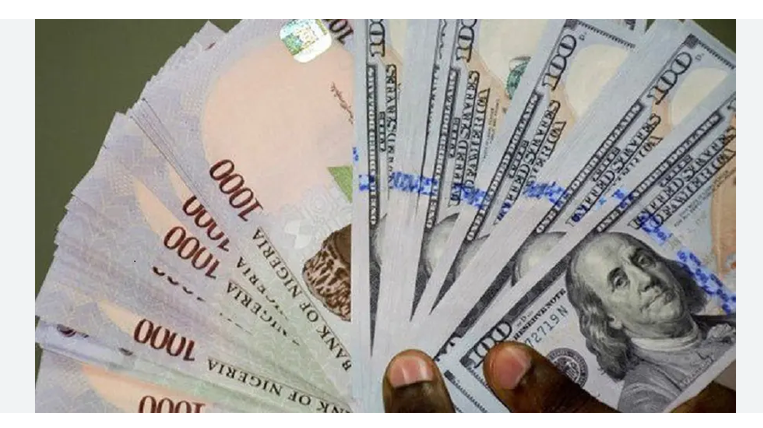
The naira closed the latest trading week at ₦1,357.61 to the dollar, gaining ₦8.08 from the previous week’s ₦1,365.69 at the Nigerian Foreign Exchange Market (NFEM). At the same time, Nigeria’s external reserves climbed to $52.25 billion, their highest level in about 17 years.
The stronger reserve position gives the Central Bank of Nigeria (CBN) a larger foreign-currency cushion. It has strengthened confidence around the country’s ability to meet external obligations and manage pressure in the foreign exchange market.
But there is an important distinction between a stronger naira on a trading screen and a cheaper basket of goods in a Nigerian home.
For a parent buying food for the family, a trader restocking imported goods or a business owner paying for foreign equipment, the question is simple: when will the stronger naira begin to reduce what they pay?
That question remains unanswered.
Nigeria’s latest economic data show that price pressures have eased, but households are still facing significant food costs. Headline inflation stood at 15.91 per cent in June, barely below May’s 15.93 per cent, while food inflation actually increased to 17.52 per cent from 16.96 per cent.
So while the pace of overall price increases has slowed, Nigerians are not necessarily seeing prices fall. In many cases, they are simply rising more slowly.
That reality was highlighted by recent reporting from Reuters, which found that the cost-of-living crisis remains severe, with many Nigerians still struggling to afford essentials despite improvements in some economic indicators and stronger investor confidence.
The reserve figures, however, are significant.
The CBN said in July that gross external reserves had risen to $52.73 billion as of July 9, up from $48.88 billion at the beginning of the year. The apex bank attributed the improvement partly to renewed confidence in the foreign exchange market.
The CBN’s July monetary policy assessment also showed reserves of $52.52 billion as of July 17, enough to cover approximately 11 months of imports of goods and services, far above the international benchmark of three months.
For the currency market, that provides an important buffer.
A healthier reserve position can improve confidence among investors and businesses, reduce fears of severe dollar shortages and give policymakers greater room to respond to sudden foreign-exchange pressure.
The CBN has also kept monetary conditions tight, retaining its benchmark interest rate at 26.5 per cent at its July 20–21 Monetary Policy Committee meeting. The bank’s decision reflected continued caution over inflation, particularly the persistence of food-price pressures.
There are also signs that the recent improvement is not entirely cosmetic. Nigeria’s real GDP expanded by 3.89 per cent in the first quarter of 2026, while the non-oil sector grew by 3.94 per cent, according to the CBN.
Still, the recovery has a long way to go before it becomes broadly visible in household finances.
For a small business owner, a stronger naira matters if imported raw materials become cheaper. For a commuter, it matters if lower foreign-exchange pressure eventually feeds into transport and fuel costs. For families, it matters when food, medicine, school-related expenses and other essentials stop consuming an ever-larger share of monthly income.
That is why the latest figures should be viewed as breathing space rather than a declaration of victory.
Nigeria now has a stronger foreign-exchange buffer and a naira that has shown greater stability. The next challenge is ensuring that those gains move beyond financial markets and into the real economy.
Until that happens, the most important economic question for ordinary Nigerians will remain unchanged: when will a stronger naira finally mean more money left in their pockets?