Why Does the Lagos Lagoon Keep Drawing People in Distress?
The woman who was pulled alive from the Lagos Lagoon on Tuesday by local boat operators may have survived, but her rescue has once again exposed a troubling pattern that has quietly unfolded across Lagos for years.
From the Third Mainland Bridge to Carter Bridge, the Lagos Lagoon has repeatedly become the scene of desperate acts, dramatic rescues and heartbreaking recoveries. Some victims have been fortunate enough to be rescued within minutes. Others have never made it back alive.
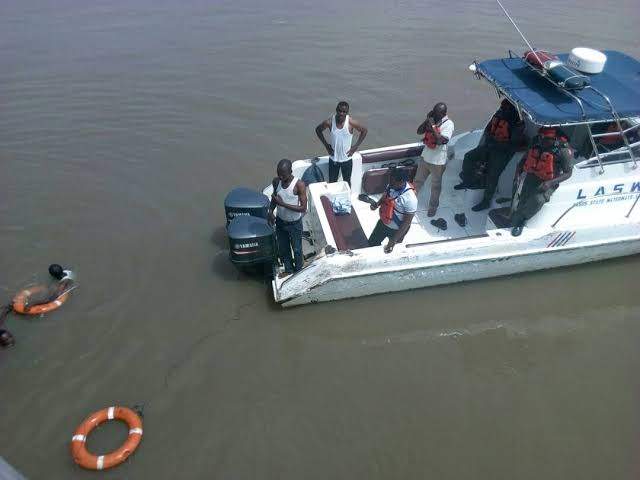
The latest incident occurred on August 4, when the woman reportedly entered the lagoon from the Idumota end of Carter Bridge. Before emergency agencies could arrive, commercial boat operators already on the waterways raced to the scene and brought her out alive.
Her identity and what led to the incident remain unknown.
Yet this was far from an isolated case.
An examination of publicly documented incidents shows that Lagos has witnessed a steady stream of rescue operations and fatalities on its waterways in recent years.
In June 2026, Marine Police officers rescued Joshua Babalola, a 23-year-old man who reportedly travelled from Ibadan before jumping into the lagoon from the Third Mainland Bridge. Police said he later attributed his actions to overwhelming financial hardship.
Just two months earlier, in April 2026, another man identified as Olu, aged 33, survived after jumping into the lagoon. According to the Lagos State Police Command, he reportedly suffered severe financial losses linked to cryptocurrency investments before the incident.
In June 2024, officers of the Lagos State Police Command’s Rapid Response Squad prevented an American national from entering the lagoon after receiving distress information from passersby on the Third Mainland Bridge.
The latest Carter Bridge rescue now joins these incidents, once again highlighting how local fishermen and commercial boat operators often become the first emergency responders, long before official rescue teams arrive.
Not every rescue has had a happy ending.
In March 2023, a man died after reportedly driving his vehicle into the Lagos Lagoon from the Third Mainland Bridge. Despite extensive search efforts, rescue teams later recovered his body.
In August 2025, Aisha Maikudi Ibrahim, 27, died after her Toyota Camry plunged into the lagoon from the Third Mainland Bridge. Days later, search teams recovered the body of Chado Daniel Danladi, another occupant of the vehicle, while a third victim also lost his life in the crash.
These recurring incidents raise difficult questions.
Why does the Lagos Lagoon continue to feature in moments of extreme distress? Is it simply because Lagos is surrounded by water and millions cross its bridges daily, or does the city’s most recognisable waterway represent something deeper for people facing overwhelming personal crises?
Security experts say geography plays a significant role. The Third Mainland Bridge, Carter Bridge and Eko Bridge are among the busiest transport corridors in Nigeria, making the lagoon one of the most accessible waterways in the country.
Mental health professionals, however, caution against assigning a single explanation to every incident. They note that while financial hardship, family problems, emotional distress and other crises may contribute in some cases, each incident has its own circumstances and should be investigated individually.
What remains undeniable is that the Lagos Lagoon has become more than a body of water. It has become a recurring crime scene, an emergency response zone and, for some families, the place where hope was either restored through a rescue or lost forever.
As investigations continue into Tuesday’s Carter Bridge incident, one question still hangs over Lagos: How many more people must enter the lagoon before stronger preventive measures, bridge surveillance and crisis intervention systems become a priority?