Lagos Emerges West Africa’s Most Climate-Resilient City
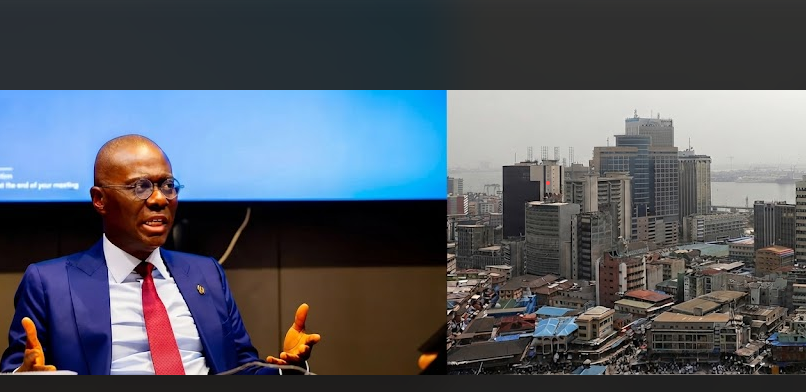
Lagos State has emerged as West Africa’s most climate-resilient city, earning the highest regional ranking for climate governance and environmental sustainability, while Governor Babajide Sanwo-Olu has been honoured with the prestigious Grand Laureate of Climate Governance award for his administration’s climate initiatives.
The recognition follows the release of the 2026 West Africa Climate Governance Index (WACGI), a comprehensive assessment that evaluated climate governance across 209 sub-national governments in the 15 member states of the Economic Community of West African States (ECOWAS).
According to the report, Lagos recorded an impressive 86.3 out of 100 points, the highest score among all participating states and provinces, securing a coveted Grade “A” rating. The state outperformed other major regional jurisdictions, including Kano, the Federal Capital Territory (Abuja), Ghana’s Greater Accra Region, Senegal’s Dakar, Côte d’Ivoire’s Abidjan Autonomous District, Cape Verde’s Praia, Benin’s Porto-Novo, São Filipe and Sierra Leone’s Bombali District.
The assessment measured each government’s performance using key indicators such as climate risk management, governance effectiveness, transparency, public participation, institutional capacity, implementation of climate policies, financing mechanisms and public accountability.
WACGI noted that Lagos distinguished itself through a combination of forward-looking environmental policies, institutional coordination and measurable climate action, making it a benchmark for sub-national climate governance in West Africa.
In recognition of the achievement, the France-based climate research organisation conferred its highest distinction, the Grand Laureate of Climate Governance, on Governor Sanwo-Olu, describing his administration as the best-performing sub-national government in climate governance across the ECOWAS region.
In a letter dated July 8, 2026, the Director of Fondation Lucien Paye, Prof. Julie Peghini, congratulated the Lagos State Government for implementing policies that strengthen climate resilience, reduce environmental risks and promote sustainable development.
She noted that the honour reflects Lagos’ outstanding commitment to combating climate change through evidence-based policies and institutional reforms.
“The recognition celebrates the remarkable progress made by Lagos State in building an effective climate governance framework capable of addressing present and future environmental challenges,” she stated, adding that the full report and supporting datasets have been published on the official French Government data repository.
The WACGI, established by the Africa Foundation (Fondation Lucien Paye) at the Cité Internationale Universitaire de Paris, evaluates climate governance using indicators aligned with the Paris Agreement, the United Nations Sustainable Development Goals (SDGs)—particularly SDG 13 (Climate Action) and SDG 17 (Partnerships for the Goals)—as well as the African Union’s Agenda 2063 for a climate-resilient and sustainable Africa.
Despite Lagos’ top ranking, the report highlighted the broader climate challenges confronting Nigeria, including coastal erosion and flooding in the southern region, desertification and rising temperatures in the north, recurrent flooding across the Middle Belt, agricultural vulnerability, gas flaring and the ongoing transition from fossil fuels.
The report, however, commended Nigeria for establishing one of the region’s most comprehensive climate governance frameworks through initiatives such as the Climate Change Act 2021, the National Council on Climate Change, the updated Nationally Determined Contributions (NDC 3.0), the Energy Transition Plan, long-term net-zero emissions strategy and expanding climate finance programmes.
Observers say Lagos’ latest recognition reinforces its growing reputation as a continental leader in climate governance and sustainable urban development, while setting a new benchmark for other cities seeking to build resilience against the increasing impacts of climate change.