Nigeria, AFC Close $1.3bn Alumina Agreement

Nigeria has taken a bold step toward reshaping its solid minerals landscape, with the Federal Government signing a landmark $1.3 billion partnership with the Africa Finance Corporation (AFC) to develop one of the country’s largest-ever alumina refinery projects.
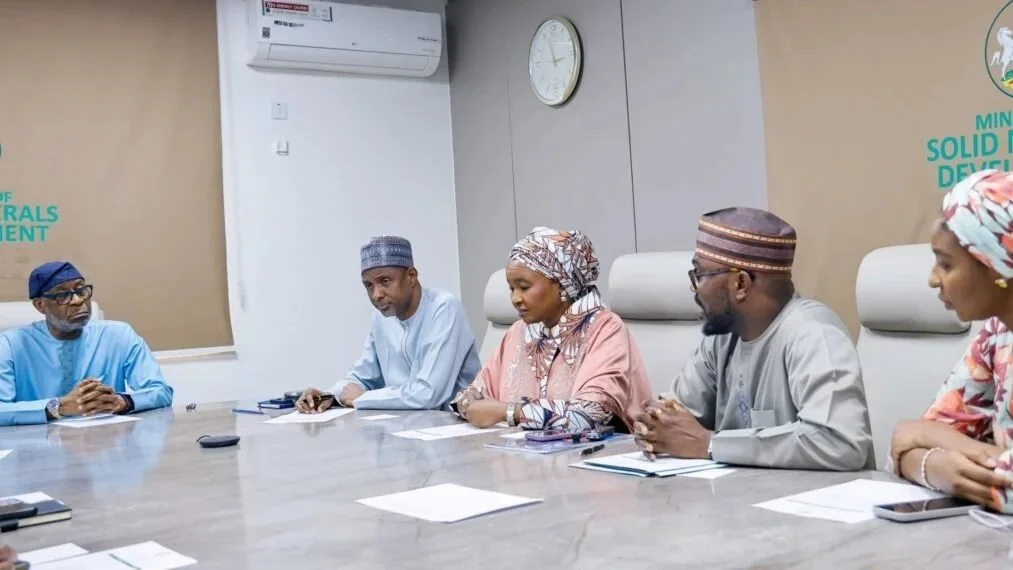
The agreement, executed through the Solid Minerals Development Fund (SMDF) in Abuja, goes beyond refinery construction — it lays the foundation for a broader transformation of the mining sector.
At the centre of the initiative is a 1 million-tonne-per-year alumina refinery, designed to deploy advanced Bayer-process technology for extracting alumina from bauxite. The facility will feature a gas-fired cogeneration system to provide its own steam and electricity, ensuring operational efficiency. Built for durability and scale, the refinery is projected to operate at roughly 95 per cent capacity over two decades, with an estimated 19 million tonnes of alumina output across its lifecycle.
But the refinery is only one piece of a three-pronged strategy. The agreement also covers a nationwide geoscience mapping programme aimed at closing critical data gaps that have historically discouraged large-scale mining investments. In addition, a dedicated investment vehicle will be established to fast-track mineral exploration and support viable projects from discovery to production.

The Minister of Solid Minerals Development, Dele Alake, described the partnership as a defining moment for Nigeria’s resource development agenda. He noted that the initiative aligns with ongoing reforms to shift the country away from exporting raw minerals toward value-added processing, job creation, and increased industrial capacity. Regulatory agencies have been directed to accelerate approvals and permits to ensure swift project delivery.
Economic projections underline the scale of ambition. Government estimates suggest the refinery could inject about $1.2 billion annually into Nigeria’s GDP, generate over $25 billion in economic value during its operational life, and attract nearly $8 billion in foreign exchange earnings. Feasibility assessments conducted by AFC and SMDF reportedly confirm the project’s commercial viability, strengthening Nigeria’s pitch as a competitive global mining destination.
Industry observers believe the collaboration could mark a turning point for the solid minerals sector, positioning aluminium processing as a catalyst for broader industrialisation. By strengthening downstream capabilities and reducing reliance on crude oil exports, the project signals a deliberate shift toward diversification — one that could redefine Nigeria’s economic trajectory in the years ahead.