Africa’s Future Depends on Women’s Economic Power, Elumelu Tells WIMBIZ
Kehinde Adeleye
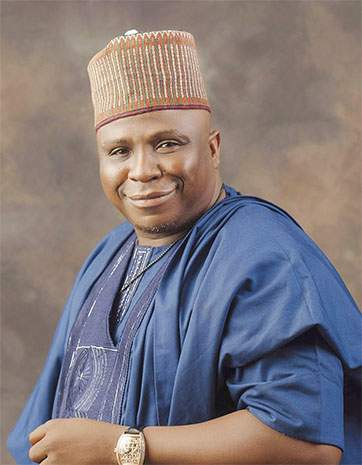
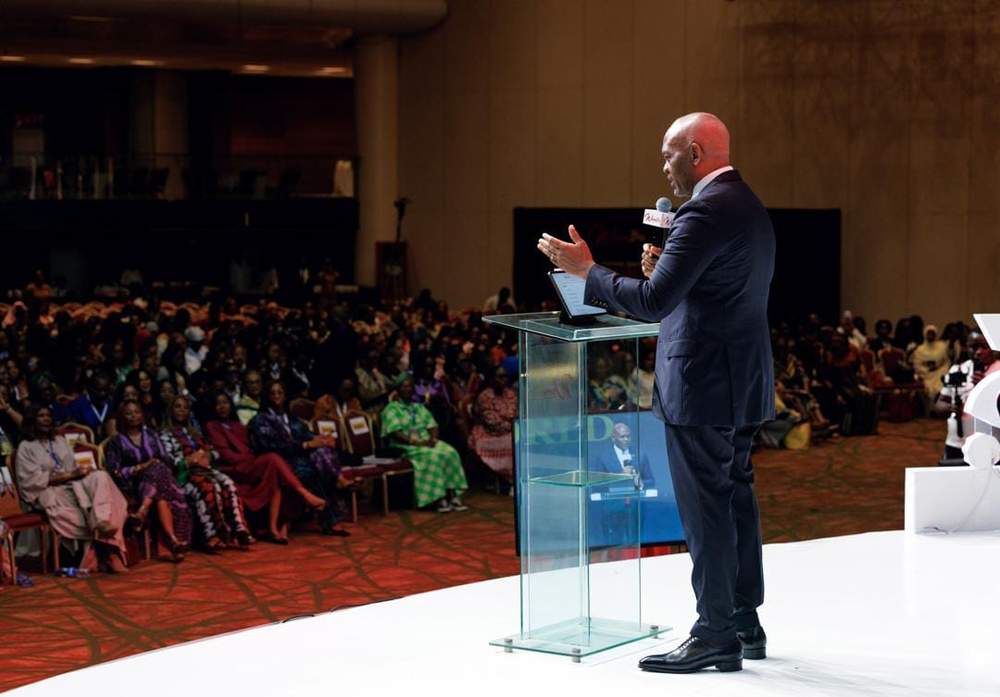
Billionaire businessman and philanthropist, Tony O. Elumelu, has described women as Africa’s greatest asset, arguing that the continent’s economic future depends largely on how effectively it harnesses the potential of its human capital.
Elumelu, Chairman of Heirs Holdings and Founder of the Tony Elumelu Foundation, made the remarks while delivering the keynote address at the 25th WIMBIZ Annual Conference held on Friday, November 6, at Eko Hotel & Suites, Victoria Island, Lagos.
Speaking on the theme, *‘The Geography of Opportunity: Why the World Needs What Africa Has’*, Elumelu said Africa had the natural and human resources to become one of the world’s most prosperous economic regions but continued to struggle with structural challenges preventing it from converting its enormous potential into widespread prosperity.
He identified electricity, value creation and access to capital as critical areas requiring urgent attention, while stressing the need for stronger trade relations among African countries.
According to him, the continent’s growing working-age population, vast mineral deposits, agricultural resources, renewable energy potential and expanding consumer market present enormous opportunities for businesses and investors.
He noted that Africa’s working-age population would increase by hundreds of millions by 2050, giving the continent a significant advantage at a time when many other parts of the world are experiencing ageing populations.
“Everyone else is ageing. We are not. That is not a problem to be managed. This is the single greatest commercial opportunity of this century, and it is ours,” he said.
However, Elumelu cautioned that possessing abundant natural resources does not automatically translate into economic prosperity, pointing to countries such as Singapore and South Korea as examples of nations that achieved remarkable economic transformation despite limited natural resources or the devastation of war.
Reflecting on the conference’s second theme, *‘Rooted, Rising, Ready: Born in Africa, Built for the World’*, he said Africa’s greatest opportunity lay in its people, particularly women whose contributions to business and economic development had not received sufficient recognition or investment.
“I look at this room and I do not see an audience. I see capital. Human capital, the most under-deployed asset on this continent,” he said.
Drawing from his personal experience, Elumelu recalled growing up with a mother who operated a small restaurant and worked tirelessly to sustain her business.
He described her as his first business teacher, saying his earliest lessons in managing money, understanding customers, taking risks and recovering from setbacks came from watching her work.
“That was my first business school. My first lesson in risk, in cash flow, in customers, in getting up the next morning when the day before had gone badly, came from a woman,” he said.
He questioned why women’s ability to lead businesses was still being debated when many had already demonstrated their capacity to build and manage successful enterprises.
According to him, women have consistently contributed to African business but have not always received the capital, recognition and leadership opportunities required to expand their impact.
Elumelu also recounted how, at the age of 34, he led a group of young Nigerians to acquire a struggling bank that few people were willing to buy. The investment eventually became the foundation of his business empire.
He described the experience as an example of what he called the democratisation of opportunity, arguing that talented people should not have their prospects determined by their family background, location or gender.
“I was not a better businessman the day someone believed in me. I simply got the chance to prove it. I call this democratising luck,” he said.
He added that his philosophy of Africapitalism was built around the idea that private businesses should create economic prosperity while delivering social benefits to society, rather than concentrating wealth in the hands of a privileged few.
On Africa’s economic challenges, Elumelu identified electricity as one of the most urgent problems confronting the continent, noting that unreliable power supply continued to undermine industrialisation, healthcare, education and technological development.
He argued that Africa could not compete effectively in the emerging artificial intelligence economy without reliable electricity and connectivity.
“For a hundred years, the question asked of Africa has been: how much can be extracted? I want to change the question. How much value can be created here?” he said.
He maintained that African countries must move beyond exporting raw materials and begin processing, refining and branding their resources locally to retain more economic value and create employment.
Using lithium, cocoa and crude oil as examples, he said the continent should develop the capacity to transform its resources into finished products before exporting them to international markets.
Elumelu also called for a shift from dependence on foreign aid to investment and trade, insisting that Africa must develop stronger domestic financial institutions capable of funding businesses and infrastructure.
He said the continent needed to mobilise its pension funds, insurance companies, banks and family offices to finance African businesses with the capacity to compete internationally.
Citing investments by Heirs Holdings in Seplat Energy and the efforts of Aliko Dangote to attract African retail investors to his refinery project, he described the developments as signs of growing confidence in African-owned businesses.
He disclosed that the Tony Elumelu Foundation had disbursed more than $130 million to support entrepreneurs and promote economic development across the continent.
According to him, building African capital that invests in African businesses would be one of the most important tasks for the continent over the next decade.
On regional trade, Elumelu expressed concern that moving goods from Lagos to Liverpool could be easier than transporting them from Lagos to Luanda, reflecting the difficulties businesses face when trading across African borders.
He noted that less than one-fifth of Africa’s trade takes place within the continent, despite the opportunities presented by the African Continental Free Trade Area.
He called for improved roads, railways, ports, payment systems, customs procedures and regulatory frameworks to make cross-border trade more accessible to businesses.
“We cannot build a continental market merely by signing documents. We must build the physical, financial and institutional infrastructure that makes continental trade commercially viable,” he said.
Turning to women’s participation in entrepreneurship, Elumelu presented figures from the Tony Elumelu Foundation’s programmes, which he said had supported 24,633 young entrepreneurs across all 54 African countries with more than $120 million in seed capital over 15 years.
He disclosed that women accounted for 48 per cent of the beneficiaries, adding that the selection process was based on the quality of business proposals rather than gender quotas.
The entrepreneurs, he said, had collectively created more than 1.5 million jobs and generated over $4.2 billion in revenue.
Elumelu said the foundation’s experience had shown that women entrepreneurs were particularly effective in growing their businesses, reinvesting profits and creating additional employment opportunities.
He highlighted the achievements of three female beneficiaries whose businesses have grown significantly after receiving $5,000 in seed capital each.
Princess Adeyinka Tekenah, who received the grant in 2015, established Happy Coffee, a business that sources coffee beans from women farmers in Taraba State and manages the process from seed to cup.
Her business has created more than 1,000 jobs, while she has also organised the Lagos Coffee Festival and is working towards establishing Nigeria’s first publicly listed coffee brand.
Another beneficiary, Olamide Ayeni-Babajide, used her $5,000 grant in 2016 to establish a recycling business that converts waste tyres into useful products.
Elumelu said the company’s revenue had increased more than twenty-fold, while it had trained about 15,000 people, most of them women and girls.
He also mentioned Nkem Okocha, founder of Mama Moni, a fintech social enterprise providing access to finance for low-income female entrepreneurs in rural communities and urban slums.
“Three women. Fifteen thousand dollars between them. Thousands of jobs. Now tell me the world does not need what Africa has,” he said.
He further disclosed that the foundation received 265,529 applications from young Africans for its entrepreneurship programme this year but could only provide funding to 3,200 applicants.
According to him, the figures demonstrate that Africa’s challenge is not a lack of entrepreneurial ideas or capable people but insufficient capital to support them.
“Women’s economic leadership is not a concession to fairness. It is a requirement for competitiveness. No serious economy can afford to systematically underutilise half its talent,” he said.
Elumelu also used the occasion to highlight the leadership roles women occupy across businesses within the Heirs Holdings Group and its associated organisations.
He cited his wife, Dr Awele Elumelu, a medical doctor and co-founder of Heirs Holdings and the Tony Elumelu Foundation, who chairs Avon HMO, Avon Medical, Heirs Insurance Brokers and Transcorp Hotels Plc. She also chairs Heirs Energies, which he said produces about 70,000 barrels of oil per day.
He recalled appointing Owen Omogiafo as President and Group Chief Executive of Transcorp Group in 2020, describing her as the youngest chief executive on the Nigerian Stock Exchange at the time and the first woman to lead the organisation.
Under her leadership, he said, Transcorp strengthened its operations in power, hospitality and energy, while women occupied 80 per cent of its senior management positions by the time she assumed the top position.
He also mentioned Uzo Oshogwe, who leads Transcorp Hotels, and Somachi Chris-Asoluka, Chief Executive of the Tony Elumelu Foundation, alongside other female executives occupying leadership positions across the group.
He listed Agatha Obiekwugo, Owen Omogiafo, Uzo Oshogwe, Somachi Chris-Asoluka, Catherine Nwosu, Dr Odiri Ogini, Adetola Fasuyi and Esther Adeola Balogun among the female leaders in the Heirs Holdings Group.
Elumelu challenged other business leaders to create similar opportunities for women, arguing that organisations that promote capable female executives stand to benefit from their contributions and performance.
“To the men in this room: the women you promote will not thank you with loyalty alone. They will thank you with results,” he said.
Beyond business leadership, he emphasised the importance of strong institutions, credible regulations and respect for contractual agreements in attracting investments to Africa.
He said investors were more likely to commit capital to countries where the judicial system worked, regulators were predictable, contracts were respected and electricity supply was reliable.
Addressing policymakers, he urged governments to focus on creating an enabling environment rather than spending resources persuading foreign investors to enter the continent.
He also reminded business executives that good governance should not be demanded from public officials alone, stressing that companies had a responsibility to uphold transparency, accountability and merit-based appointments.
In his closing remarks, Elumelu said Africa must take responsibility for its own development, noting that the continent’s future should be shaped by Africans rather than left entirely to foreign donors and development partners.
He urged women not to wait for permission or favourable circumstances before pursuing leadership positions, building businesses and investing in their communities.
He also challenged WIMBIZ to make its next 25 years more impactful by moving beyond advocacy towards providing women with greater access to capital and decision-making positions.
“Advocacy got women into the room. Capital will get them to the head of the table,” he said.
Elumelu concluded by reiterating that while Africa possesses valuable natural resources, its greatest competitive advantage remains its people, particularly women whose talents and entrepreneurial abilities must be fully recognised and supported.
“Born in Africa. Built for the world. The world needs what Africa has. And what Africa has, more than oil, more than lithium, more than land, is you.”