Lagos Trains Health Workers On Better Response To SGBV Survivors
By Emmanuel Daniji
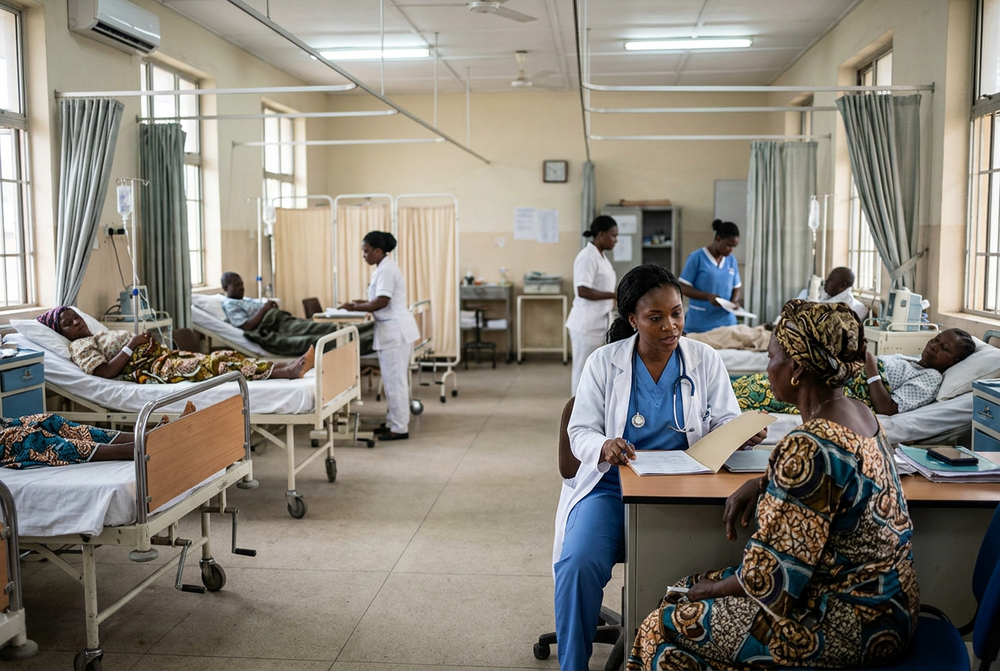
For a survivor of sexual or gender-based violence, walking into a hospital after an assault can be one of the most difficult moments of their life. How they are received, questioned and treated can affect not only their emotional recovery but also whether vital medical and forensic evidence is preserved for possible legal action.
Recognising the importance of that first encounter, the Lagos State Domestic and Sexual Violence Agency (DSVA), in partnership with the Lagos State Ministry of Health and the Primary Health Care Board, has begun training healthcare professionals on how to respond to survivors with greater skill, sensitivity and compassion.
The initiative started with a one-day training for 50 medical social workers drawn from health facilities across Lagos State. The training, held on September 3 at the Lagos Chamber of Commerce and Industry (LCCI), focused on equipping the participants with the skills needed to provide appropriate psychosocial support to survivors.
Active listening, empathy and a survivor-centred approach formed a major part of the training, with emphasis on ensuring that survivors are treated with dignity and supported from the moment they enter the healthcare system.
The programme was followed by a two-day training for medical doctors and other healthcare workers, which began on Wednesday, September 9 and ends today, Thursday, September 10.
Unlike training that focuses only on policies and definitions, the programme is designed to prepare healthcare workers for the realities they may face when managing sexual assault cases.
On the first day, participants examined the meaning and different forms of gender-based violence, the prevalence of sexual assault, the influence of cultural beliefs and social norms, survivors’ rights, the use and disbursement of rape kits, as well as procedures for documenting and reporting SGBV cases.
They also reviewed Lagos State’s existing structures and services for survivors of sexual assault and received guidance on the Mandatory Reporting Policy.
The practical side of caring for survivors is another major focus of the programme. Healthcare workers are being trained on appropriate history-taking, obtaining informed consent, physical examination, understanding genital anatomy, treatment, disease prevention, medical documentation and referral coordination.
They are also being trained in forensic evidence collection, including the handling of DNA evidence, forensic screening and the proper use of rape kits.
These procedures are particularly important because evidence can be lost if the appropriate steps are not taken at the right time. A survivor who comes to a health facility therefore needs more than medical attention. They need healthcare professionals who understand how to provide care without causing further trauma while also following the procedures required to preserve evidence.
The medico-legal aspect of the training is being handled by forensic investigation expert, Mrs Avril Eyewu-Edero.
Other facilitators include Dr Veronica Iwayemi, Mrs Oluwatumininu Oni, Head of Case Management at the DSVA, and Dr Oluwajimi Sodipo, a Consultant Family Physician.
Through interactive sessions, case scenarios and practical demonstrations, the participants are being exposed to situations they are likely to encounter in their various health facilities.
Declaring the training open, DSVA Executive Secretary, Mrs Titilola Vivour-Adeniyi, reaffirmed the agency’s commitment to strengthening the capacity of healthcare workers to respond to survivors professionally and sensitively.
For Lagos, the goal is to ensure that a survivor’s first point of contact with the health system becomes a place of safety and support rather than another source of trauma.
Beyond treating injuries or providing medication, trained healthcare workers can play a crucial role in helping survivors regain confidence, access psychosocial support, understand their rights and, where necessary, ensure that forensic evidence is properly collected and documented.
The training is therefore aimed at strengthening the chain of care—from the first conversation with a survivor to the medical examination, evidence collection, referral and possible presentation of evidence in court.