Okada Riders Protests High Ticket Fees
By Sherif Salau
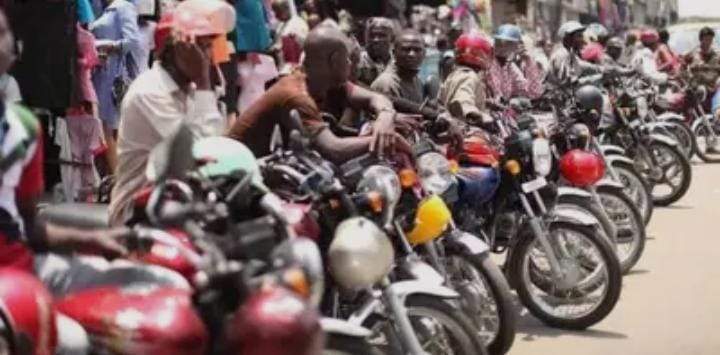
Motorcycle operators in Ejigbo, Lagos have protested the hike in the ticket prices issued to them by their respective unions.
Across major routes, Okada riders parked their bikes, refused passengers, and gathered in open defiance of their own union. The trigger was a sudden demand that many described as crushing: a ₦10,000 fee for a compulsory jacket or apron meant to identify “bonafide” riders, plus an increase in the daily operating ticket from ₦1,100 to ₦1,500.
For thousands of residents who depend on Okada as their only practical means of getting to work, school, or the market, the protest turned an ordinary Monday into a day of stranded journeys and rising frustration. With few alternative transport options in the area, the absence of the bikes was immediately felt.
One rider, speaking after the dust had settled, captured the mood among his colleagues. The union, he said, appeared more interested in extracting money than in the welfare of members already struggling under the weight of the economy. Accepting the original ₦10,000 jacket fee, he argued, would only open the door to further levies — annual stickers, and other charges that accumulate as the year wears on. “Where do they expect us to find that kind of money right now?” he asked.
The standoff did not last indefinitely. After negotiations, the union and the riders reached a compromise. The jacket fee was slashed from ₦10,000 to ₦2,500, while the daily ticket remained unchanged at ₦1,100. The agreement allowed services to resume, but the episode left a clear message: even within their own organised structure, commercial motorcycle operators are willing to push back when they feel the burden has become unbearable.
In a city where Okada remains the backbone of short-distance mobility for many low- and middle-income households, the brief paralysis in Ejigbo served as a reminder of how quickly transport disputes can disrupt daily life. For the riders, the day was a successful defence of their livelihoods. For passengers, it was another reminder of how tightly their routines are tied to the men on two wheels, and to the fragile arrangements that keep them on the road.