How Lagos Plans to Raise Manufacturing Contribution to GDP to 10.2% in 2026
Kehinde Adeleye
The manufacturing sector contributed 9.57 per cent to Nigeria’s real Gross Domestic Product (GDP) in the first quarter of 2026, with its contribution projected to rise to 10.2 per cent by the end of the year, the Lagos State Government has said.
The government also said the sector was projected to grow by 3.1 per cent in 2026, as it unveiled the Lagos State Industrial Policy (LSIP) 2025–2030, aimed at strengthening manufacturing and accelerating industrial development in the state.
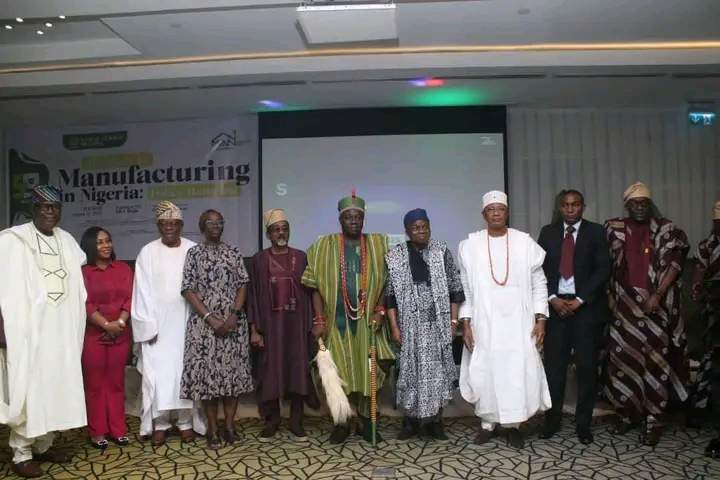
The policy was unveiled at the 59th Annual General Meeting of the Manufacturers’ Association of Nigeria (MAN), Ikeja Branch, held at the Radisson Blu, Ikeja.
Commissioner for Commerce, Cooperatives, Trade and Investment, Folashade Bada Ambrose-Medebem, who was represented by the Director of Commerce, Segun Alogba, described the policy as one of the most significant industrial frameworks developed by the state in recent years.
She said the LSIP was designed to translate government priorities into practical measures capable of improving the operating environment for manufacturers and other businesses.
According to her, Nigeria’s manufacturing sector recorded 3.29 per cent year-on-year growth in the first quarter of 2026, representing its strongest quarterly performance in four years.
She added that the sector contributed 9.57 per cent to real GDP during the period, while the projected 3.1 per cent growth in 2026 could increase its contribution to 10.2 per cent.
The commissioner said the industrial policy was anchored on six pillars: developing a competitive industrial base, creating an enabling business environment, supporting Micro, Small and Medium Enterprises, providing infrastructure, advancing skills development, and promoting innovation and sustainability.
She stressed that implementation would determine whether the policy would deliver meaningful results.
“Policies alone do not build factories. Policies alone do not create jobs. What transforms a policy from paper to prosperity is implementation,” she said.
The state government said the policy would introduce measures to reduce regulatory bottlenecks and shorten the time required to establish, operate and expand industrial enterprises.
It also plans to establish one-stop investor facilitation and fast-track approvals, while expanding and optimising industrial clusters in Ikeja, Apapa, Ilupeju and the Lekki Free Zone manufacturing corridor.
To improve access to finance, the government said it would strengthen the Lagos Industrial Development Fund and the LASMECO partnership with the Bank of Industry, providing qualifying small businesses with single-digit, non-collateralised loans.
The Lagos State Export Readiness Programme (LASERP) will also support businesses in transitioning from informal operations to export-ready enterprises capable of accessing opportunities under the African Continental Free Trade Area (AfCFTA).
Govt promises business-focused implementation
The Secretary to the Lagos State Government, Abimbola Hundeyin-Salu, represented by the Director of Public Affairs, Ojelabi Olumuyiwa, said the administration would prioritise measurable outcomes in implementing its industrial policies.
She said the government would continually assess whether businesses were operating more easily, manufacturers were reducing production costs, young people were gaining employment and investors were becoming more confident in Lagos.
Hundeyin-Salu acknowledged challenges confronting manufacturers, including rising production costs, energy shortages, limited access to finance and regulatory bottlenecks.
She assured manufacturers that infrastructure development covering roads, transportation, drainage and connectivity remained a priority for the state government.
However, Chairman of the MAN Ikeja Branch, Thomas Osobu, said manufacturers were still battling policy inconsistency, multiple taxation, foreign exchange volatility, rising energy costs and inadequate infrastructure.
He called for sustained dialogue between government and the private sector, saying consistent policy implementation would improve industrial productivity, attract investment, promote innovation and create quality employment.
The Ologba of Ogba, HRM Oba Latif Oladimeji Egbeyemi, also urged stronger engagement between government and manufacturers, noting that closer interaction would help policymakers better understand the challenges confronting industries.
Meanwhile, the Chief Executive Officer of the Lagos State Electricity Regulatory Commission (LASERC), Temitope George, acknowledged concerns over electricity tariffs and supply raised by manufacturers.
She reaffirmed the commission’s commitment to building a transparent and well-regulated electricity market, with the long-term objective of providing reliable electricity at appropriate prices.
George also encouraged continued engagement between MAN and LASERC to address electricity challenges affecting industrial clusters.
The AGM also featured a leadership transition, which was commended by the Ologba of Ogba for its maturity.
An award of credence was presented to Commissioner Folashade Bada Ambrose-Medebem in recognition of her efforts toward developing solutions to improve the business environment in Lagos.
The state government subsequently urged manufacturers to partner with it in advancing Lagos’ industrialisation agenda, particularly by leveraging the AfCFTA market of more than 1.3 billion people and the state’s strategic position as a major industrial and commercial hub in West Africa.