The Ordinary Side of a Cardinal
The Ordinary Side of a Cardinal
Between Moral Guidance and Political Activism
By Kunle Awosiyan
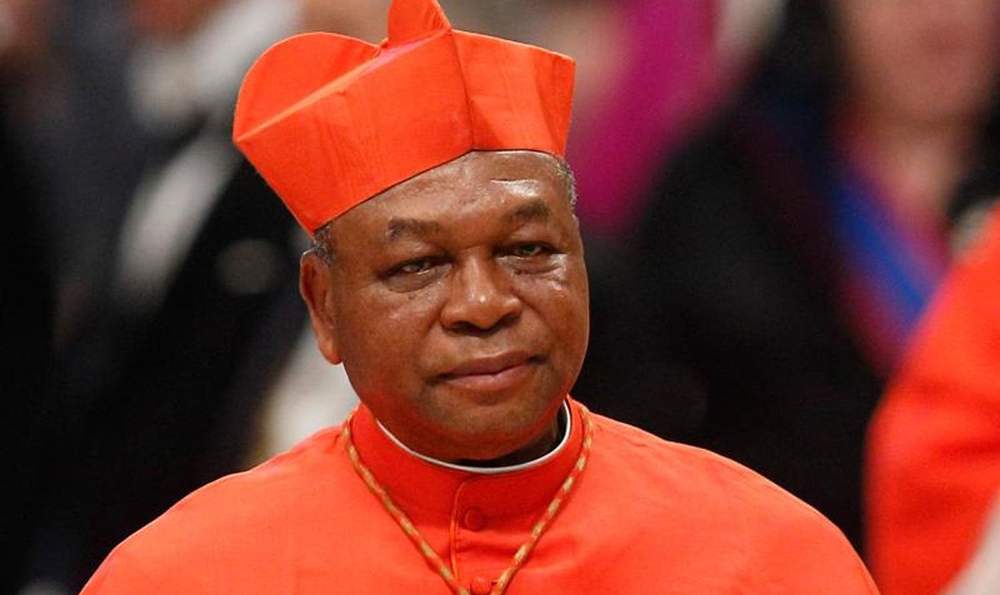
Cardinal John Olorunfemi Onaiyekan is one of Nigeria’s most respected Catholic prelates. He turned 82 on January 29, 2026, and has spent decades promoting peace, interfaith dialogue, and national unity.
Ahead of the 2023 presidential election, Cardinal Onaiyekan publicly expressed his support for Peter Obi and explained why he would not vote for Bola Ahmed Tinubu, the candidate of the All Progressives Congress (APC). Like every Nigerian, he had the constitutional right to support the candidate of his choice. However, Obi eventually finished third in the election.
Last week, Cardinal Onaiyekan joined other Catholic bishops in a meeting with President Bola Ahmed Tinubu to present the Church’s concerns and expectations ahead of the 2027 general election. The meeting, however, reflected the different perspectives of the Church and the government on the country’s current direction.
According to my assessment, the bishops came prepared to challenge the administration on several national issues. President Tinubu, in turn, responded to many of their concerns with explanations of his administration’s policies and achievements. While the meeting was cordial, it was evident that both sides remained unconvinced by each other’s arguments.
Following the meeting, Cardinal Onaiyekan, during an interview on Arise Television, stated that the President appeared detached from the realities confronting ordinary Nigerians and was not sufficiently receptive to the concerns raised by the bishops.
Constructive criticism is an essential part of democracy. However, religious leaders should be careful not to allow political preferences to overshadow their primary calling as spiritual shepherds. The line between moral guidance and political activism should remain clearly defined.
This reminds me of two books titled The Truth in Black and White by J.C. Anderson and Harry R. Jackson Jr., which approached the relationship between faith, race, and public policy from a different perspective.
J.C. Anderson’s 2017 book explores race relations in the United States through his personal experience of living as the only white resident among 139 African American neighbours in a government-subsidised housing community. Rather than relying solely on historical analysis, Anderson combines personal experiences, interviews, and historical research to examine the roots of racism and its enduring consequences.
His central message is that lasting racial healing requires honest conversations, acknowledgement of historical injustices, expanded educational opportunities, economic empowerment, and a commitment by people of every race to work together for justice and reconciliation.
Harry R. Jackson Jr.’s 2008 book examines faith, politics, and racial reconciliation in America. Jackson argues that Christians should avoid becoming consumed by partisan politics. Instead, he encourages churches to promote justice, righteousness, and truth while engaging society without losing their spiritual identity. His emphasis is on influencing public life through moral leadership rather than political partisanship.
Both authors demonstrated that it is possible to influence government policies without becoming partisan actors. Their writings shaped public conversations and offered ideas that policymakers could engage with regardless of political affiliation.
There is a lesson here for Nigerian religious leaders. Pastors and clerics should certainly speak truth to power, offer wise counsel, and pray for the nation. They should challenge injustice where necessary, but they should also avoid becoming political activists seeking relevance through constant public confrontation.
Archbishop Desmond Tutu, in his book God Is Not a Christian, reminds us that every human being, regardless of race, tribe, ethnicity, or religion, deserves equal dignity and respect. His advocacy was rooted in justice, reconciliation, and peace rather than partisan politics.
Nigeria remains a deeply religious and politically polarised nation. As elections approach, statements made by prominent religious leaders are often interpreted through partisan and religious lenses. Although Cardinal Onaiyekan may speak on behalf of all Nigerians, many Muslims may still see him primarily as a Christian leader. This reality makes it even more important for religious leaders to communicate in ways that unite rather than divide.
Cardinal Onaiyekan is not only a respected priest but also a distinguished intellectual. Among his notable works are Religion for Peace (2024), Let the Truth Prevail: Nocturnal Conversations on the Church, the Nation, and the World Today (2021), co-authored with Emmanuel Ojeifo, and Seeking Common Grounds: Inter-Religious Dialogue in Africa (2013). These publications consistently promote peace, dialogue, reconciliation, and national cohesion.
If Cardinal Onaiyekan wishes to exert even greater influence on Nigeria’s political development, I believe his greatest strength lies in his scholarship, preaching, moral persuasion, and prayers. Those enduring contributions are likely to have a more lasting impact than direct political activism.
To me, that is the ordinary side of a cardinal.