How Adebutu Transformed Wema Bank from Distress to N1trn Valuation
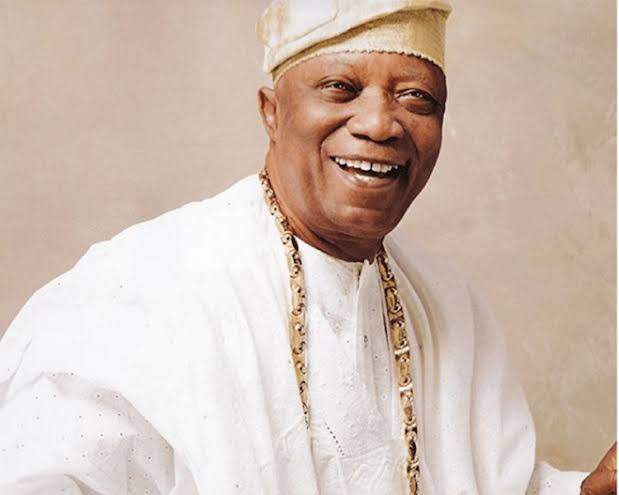
In 2014, Kessington Adebukunla Adebutu, the man many Nigerians simply know as Baba Ijebu, made a move that, at the time, looked less like strategy and more like a high-stakes gamble.
This was not unfamiliar terrain for him. As a known risk-taker, he had already etched his name into Nigeria’s business landscape by founding Premier Lotto, the country’s first betting franchise, a venture that thrived on chance, probability and instinct. But even by his standards, what he was about to do with Wema Bank was different.
Wema Bank, at the time, was far from attractive. It was a distressed, loss-making regional bank, weighed down by years of underperformance and limited national relevance.
To most investors, it was a cautionary tale, a poorly run institution with a bleak future and very little to inspire confidence. Naturally, many stayed away.
But Adebutu did not. Where others saw decline, he saw possibility. Where others saw risk, he saw room for reinvention.
In that struggling institution, he saw a bank that could do better not by chance, but through structure, discipline and the right leadership.
Acting on that belief, he made his first decisive move, acquiring 29 percent of the bank’s shares at what many would later describe as a giveaway price. It was a quiet but calculated entry. He did not stop there.
In a move that would later solidify his influence, he acquired an additional 32.8 percent stake in the name of his daughter, Abolanle Matel-Okoh, tightening his grip on the institution and positioning himself for long-term control.
What followed was not an overnight takeover, but a slow, deliberate accumulation of power. From 2014 through 2019, Adebutu continued to acquire shares bit by bit, steadily increasing his stake until he eventually emerged as the principal and highest shareholder of the bank.
It was a patient strategy, one that reflected not just confidence, but a clear long-term vision. With control secured, the real work began.
Adebutu understood that ownership alone would not revive the bank. What Wema needed was direction.
To achieve this, he brought in an astute management team led by Managing Director Moruf Oseni, tasking them with the responsibility of changing the bank’s fortunes.
The institution itself carried history, having been founded by the father of late Nigerian politician Doyin Okupe, but history alone could not guarantee survival. It needed reinvention.
At the time, the move still looked like a gamble. But 12 years later, it is a gamble that has paid off and handsomely.
Wema Bank is no longer the struggling regional lender it once was. It has been transformed into a national financial institution, with a valuation now exceeding N1 trillion.
This is a remarkable leap from its earlier identity as a largely Yoruba regional bank when Adebutu first took over the reins in 2014.
His patience, often underestimated in high-stakes investments, has proven decisive. Over time, his measured approach began to yield results, and as the bank grew, so did his fortunes.
Today, that initial investment has ballooned to an estimated N314.63 billion, placing Adebutu among the most significant individual shareholders in Nigeria’s banking sector. It is not just a financial milestone; it is a statement about the power of conviction and long-term thinking.
But beyond the valuation lies an even more compelling story. Wema Bank’s 2025 financial year stands as the strongest in its history.
The bank recorded a 116.3 percent increase in profit before tax, rising to N222.07 billion from N102.52 billion in 2024. Profit after tax surged even further, climbing by 124 percent to N193.19 billion from N86.28 billion.
In a remarkable twist, the bank noted that this single-year performance surpassed its cumulative profit over the previous five years.

Driving much of this growth is ALAT, the bank’s digital platform widely regarded as Africa’s first fully digital bank. More than just a technological addition, ALAT has become central to Wema’s strategy, powering deposit mobilisation and customer acquisition.
Today, over 98 percent of transactions are conducted outside physical branches , a shift that has significantly reduced operating costs while allowing the bank to channel savings into lending and expansion.
For Adebutu, the returns are not just reflected on paper. He is set to receive N14.84 billion in gross dividends, the largest single dividend payout he has recorded since becoming the bank’s principal shareholder. It is a tangible reward for years of calculated risk and sustained commitment.
And the gains extend beyond him. His daughter, Abolanle Matel-Okoh, who serves as a non-executive director, holds a separate stake in the bank, ensuring that the financial benefits of this investment ripple within the family structure.
At N314.63 billion, Adebutu’s stake in Wema Bank is now larger than the total market capitalisation of several Nigerian banks listed on the exchange.
It is a striking indicator of both how far the bank has come and how significantly his financial footprint has expanded beyond the gaming industry that first brought him national recognition.
What began in 2014 as a risky bet on a struggling institution has, over time, evolved into one of Nigeria’s most compelling corporate turnaround stories, a story not just of a bank revived, but of a vision that refused to follow the crowd.