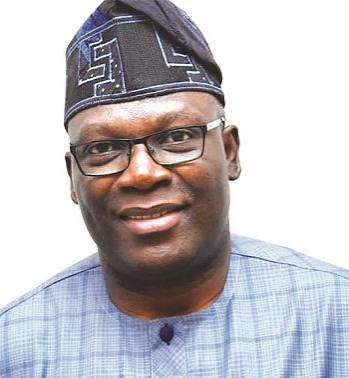
Atiku’s Anti-Subsidy U-Turn: A Joke Taken Too Far
Atiku’s Anti-Subsidy U-Turn: A Joke Taken Too Far.
By Seye Oladejo, Lagos APC Chieftain
There is a point at which political criticism ceases to be constructive opposition and becomes a comedy of contradictions. Former Vice President Atiku Abubakar may have crossed that line with his latest position on fuel subsidy.
Atiku has reportedly declared that if elected President, he would restore the petrol subsidy and ensure that whoever allegedly stole the money saved from subsidy removal refunds it.
One cannot help but ask: is this the same Atiku Abubakar who, not too long ago, supported the removal of fuel subsidy?
Indeed, Atiku had previously described subsidy removal as inevitable and supported the policy during the 2023 presidential campaign, while criticising the manner in which the Tinubu administration implemented the reform.
Today, with the 2027 presidential contest taking shape, the same policy has apparently acquired a completely different meaning.
This is not merely a change of mind. It raises a fundamental question about the consistency of political leadership.
The Politics of Selective Memory
Atiku’s latest position creates an awkward political problem.
If subsidy removal was fundamentally wrong, why did he previously describe it as inevitable and support the policy?
If subsidy removal was necessary but badly implemented, then the sensible alternative is to explain precisely how it should have been implemented differently-not simply promise Nigerians a return to the very system that successive administrations struggled to sustain.
And if the problem is accountability for the resources released by the reform, then let us have that conversation.
Where did the money go? What was saved? How was it allocated? What projects were funded? What benefits accrued to Nigerians?
These are legitimate questions.
But accountability should not be confused with economic nostalgia.
Is This Policy Somersault Electoral Desperation?
One cannot also resist asking whether this latest policy somersault is driven, at least in part, by political desperation.
Atiku has indicated that the 2027 presidential election would be his final attempt at the presidency. If that is indeed the case, is the sudden embrace of subsidy restoration a carefully considered economic policy-or an electoral strategy born of the urgency to make one last bid for the highest office in the land?
After several presidential attempts, perhaps the temptation to tell Nigerians what they desperately want to hear becomes irresistible. But the presidency of Nigeria is too consequential to be reduced to a last-chance political project.
A policy as fundamental as fuel subsidy cannot be switched on and off like a campaign slogan simply because an election is approaching.
Nigerians deserve to know whether Atiku’s new position represents a genuine reconsideration of economic policy or merely another political calculation ahead of what he has described as his final presidential contest.
If it is the former, he owes the country a compelling economic justification. If it is the latter, then Nigerians must be wary of a promise whose principal beneficiary may be the candidate rather than the country.
From Subsidy U-Turn to the National Assets Question
There is, perhaps, a familiar pattern here.
Atiku’s latest anti-subsidy position may remind Nigerians of another controversial feature of his political and economic philosophy: his long-standing advocacy of privatisation and the sale of government assets. During the 2023 presidential campaign, his position on the disposal of public assets became a subject of considerable political debate, particularly the argument that government should sell some state-owned enterprises and deploy the proceeds for development.
The question Nigerians are entitled to ask is not whether privatisation can ever be economically justified. Of course, it can. The real question is who benefits, under what terms, and with what safeguards against cronyism and the transfer of public wealth into private hands?
Atiku’s record as Vice President, particularly his association with the privatisation process under the Obasanjo administration, remains part of Nigeria’s political history and has attracted both praise and controversy. Supporters saw the exercise as an attempt to reform inefficient public enterprises; critics raised questions about transparency, valuation, beneficiaries and the handling of national assets.
Those criticisms and controversies should not simply be wished away.
That history makes his present subsidy position even more deserving of scrutiny.
Nigerians have seen this movie before: public assets on one hand, public subsidies on the other-and political promises conveniently changing with the electoral weather.
If Atiku now believes that subsidy removal was fundamentally wrong, he owes Nigerians a clear explanation of how this position squares with his previous advocacy of difficult economic reforms.
And if he believes that national assets should be sold, he must equally explain how Nigerians can be assured that such transactions will never become an avenue for enriching friends, associates or politically connected interests.
The Nigerian people are not merely looking for a politician who can identify their frustrations. They are looking for a leader whose economic philosophy is consistent, transparent and defensible-whether there is an election around the corner or not.
That is where the subsidy debate becomes bigger.
It becomes a question of credibility, consistency and the stewardship of the Nigerian people’s commonwealth.
Subsidy Was Never a Sustainable Economic Model
Let us be clear: the removal of fuel subsidy has imposed real hardship on Nigerians. No responsible government should pretend otherwise.
The policy produced an immediate shock to household incomes, transportation costs and the general cost of living. The pain is real, and government must continue to respond with policies that cushion the impact on ordinary Nigerians.
But acknowledging the pain should not compel us to romanticise the old system.
For years, Nigeria committed enormous public resources to subsidising petroleum consumption while questions persisted about the transparency, sustainability and beneficiaries of the arrangement. A country cannot indefinitely deploy scarce public resources to maintain an artificially low price while sacrificing investments in infrastructure, education, healthcare, security and productive capacity.
The fundamental question is not whether subsidy removal was painful. It is whether Nigeria could continue indefinitely with a system that placed an enormous burden on public finances.
President Bola Tinubu made the politically difficult decision to end the regime in 2023. It was neither painless nor universally popular. But leadership is sometimes about taking decisions that are necessary rather than decisions that are immediately popular.
Subsidy Politics: Sweet Promise, Bitter Consequences
There is an easy political temptation here.
Tell Nigerians that fuel prices will fall. Promise that government will restore subsidy. Suggest that everything can return to the way it was.
It sounds wonderful.
But economics does not operate according to campaign slogans.
Every subsidy must ultimately be paid for by somebody. If government pays for it, the money must come from taxation, borrowing, oil revenue or some other public resource. And every naira spent sustaining an inefficient subsidy regime is a naira that cannot simultaneously be spent on infrastructure, healthcare, education, security or productive investment.
The real debate should therefore be about how to make the post-subsidy economy work for Nigerians, not how to resurrect an old system because an election is approaching.
Reform Must Come With Accountability
That said, the Tinubu administration should not interpret the foregoing as a licence to escape scrutiny.
The removal of subsidy created fiscal space. Nigerians have every right to demand that the resulting resources translate into tangible improvements in their lives.
More revenue must mean more development.
States and local governments must also demonstrate that increased Federation Account allocations are reaching the grassroots through better roads, healthcare, education, water supply, security and other basic services.
The argument for reform becomes stronger when citizens can see its dividends.
This is precisely where the government must continue to improve its communication, transparency and delivery.
Reforms cannot survive indefinitely on the strength of economic theory. They must ultimately be justified by results.
A Presidential Candidate Must Offer More Than Reversal
Atiku Abubakar is an experienced politician and a former Vice President of Nigeria. He therefore knows better than most that serious economic management involves difficult choices and trade-offs.
Nigerians deserve more than promises designed to exploit their frustrations.
If he believes the subsidy regime should return, he should tell Nigerians exactly how much it would cost annually, where the money would come from, how the system would be protected from abuse and why the country should return to it after decades of struggling with its consequences.
He should also explain the difference between his present position and the position he expressed before.
That is not an unreasonable demand.
It is the minimum expectation of political consistency.
The 2027 Election Should Be About the Future
Nigeria’s 2027 election should not become a referendum on who can make the most attractive promise.
It should be a contest of ideas, credibility, competence and demonstrable capacity.
Atiku has every right to challenge the Tinubu administration. Indeed, a vibrant democracy requires robust opposition. But opposition should not mean opposing everything today that one supported yesterday.
Nor should the electorate be invited to forget yesterday’s positions simply because tomorrow’s votes are at stake.
Atiku’s latest subsidy proposal may make for attractive campaign rhetoric. But when subjected to the cold light of economic reality and political consistency, it looks less like a coherent policy alternative and more like a joke taken too far.
Nigeria cannot afford to run its economy on political convenience.
The country needs reforms that are humane, accountable and sustainable-not policies that are dismantled, restored and redesigned every election cycle.
The real challenge before every presidential aspirant is therefore simple:
Don’t just tell Nigerians what they want to hear. Tell them what the country needs to hear-and, more importantly, show them how you intend to deliver it.
That is what leadership demands.
And that is what the Nigerian people deserve.