Hundreds Set to Benefit as Igbogbo/Baiyeku Expands Free Wellness Outreach to Zone 2 Communities
By Emmanuel Daniji
For many residents in local communities, access to basic healthcare often depends on distance, affordability and awareness. Routine medical checks that could detect health conditions early are frequently postponed until symptoms become severe, placing lives at unnecessary risk.
It is a challenge the administration of the Executive Chairman of Igbogbo/Baiyeku Local Council Development Area (IBLCDA), Omo’ba Hammed Olalekan Aroyewun, says it is determined to address through a grassroots healthcare intervention designed to bring essential medical services directly to the people.
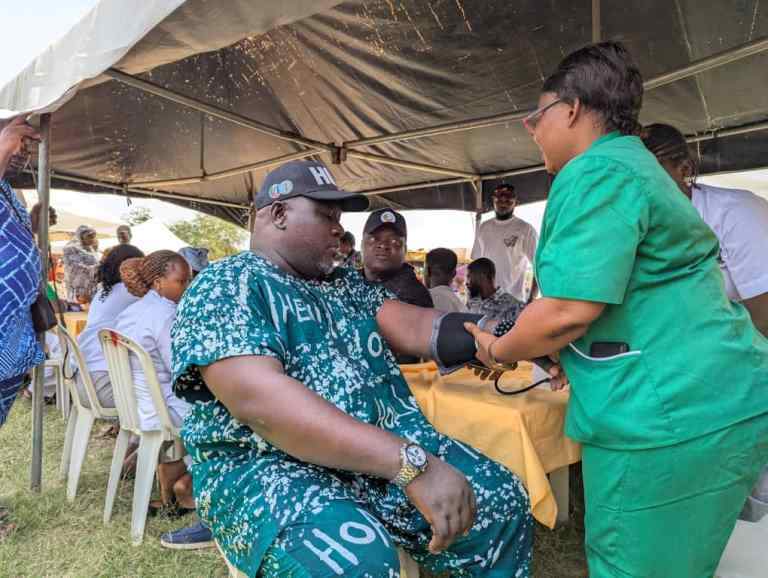
Following the successful launch of the Free Optimal Wellness Outreach in Zone 1 of Igbogbo Town, the initiative is now moving to Zone 2 communities, offering residents another opportunity to access free medical consultations, health screenings and wellness services.
The latest edition of the outreach is scheduled to hold at Oreyo Grammar School, Igbogbo, on Saturday, June 20, 2026, and is expected to serve residents from Selewu, Oreyo, Olumo, Ire and Akin Ogunlewe communities, all within the Zone 2 demarcation of the Central Development Committee (CDC).
The programme forms part of the healthcare component of the council’s GLORY Agenda, a governance framework that places the health, wellbeing and dignity of residents at the centre of community development.
For residents who may not have visited a hospital in months or even years, the outreach presents a rare opportunity to receive professional medical attention without financial barriers.
According to council officials, beneficiaries will have access to free consultations with qualified and experienced medical practitioners who will provide diagnosis, treatment recommendations and medical guidance tailored to individual health needs.
One of the major attractions of the programme is the provision of free health screenings, including blood pressure checks, blood sugar tests and Hepatitis B screening.
Health experts have repeatedly warned that conditions such as hypertension and diabetes are often referred to as “silent killers” because many people live with them unknowingly until complications arise.
By providing these screenings at no cost, the council hopes to encourage early detection and timely intervention.
“Knowing your health status is the first step toward protecting your future,” a council official noted while explaining the objectives of the programme.
Vision care is also a key component of the outreach.
Qualified optometrists will be available to conduct comprehensive eye examinations for residents, while beneficiaries requiring corrective lenses will receive free eyeglasses on-site.
For many elderly residents and low-income families, access to eye care services can be financially challenging, making the intervention particularly significant.
Council authorities emphasized that residents with medical conditions requiring specialist attention will not be left without support.
Referral services will be provided for advanced medical cases, ensuring that individuals requiring further treatment receive proper guidance on accessing appropriate healthcare facilities.
The initiative also includes health education and wellness counselling sessions aimed at helping residents make informed decisions about their lifestyles, nutrition, disease prevention and overall wellbeing.
Medical professionals are expected to engage participants on practical steps they can take to improve their health outcomes and maintain healthier lives.
The outreach programme first commenced in May 2026 in Zone 1, where hundreds of residents reportedly benefited from the free healthcare services.
Encouraged by the positive response and community participation, the council has expanded the initiative to ensure more residents across Igbogbo/Baiyeku LCDA can access essential healthcare support.
Community leaders and stakeholders have welcomed the programme, describing it as a people-focused intervention capable of improving health awareness and strengthening preventive healthcare practices at the grassroots level.
The council administration has called on residents, religious organisations, market associations, community groups and traditional institutions within Zone 2 to mobilize participation and encourage members to take advantage of the free services.
Officials believe that beyond providing immediate medical assistance, the outreach is helping to build a culture of proactive healthcare, where residents prioritize regular health checks and preventive care rather than waiting until illness becomes severe.
As healthcare challenges continue to affect many communities across the country, initiatives such as the Free Optimal Wellness Outreach demonstrate how local governments can play a critical role in improving public health outcomes and bringing essential services closer to the people.
For the residents of Selewu, Oreyo, Olumo, Ire and Akin Ogunlewe, Saturday’s programme may be more than just a medical outreach.
For some, it could be the check-up that detects a hidden condition.
For others, it could be the pair of glasses that restores clearer vision.
And for many families, it represents a reminder that healthcare is not merely a service—it is a fundamental part of community wellbeing and human dignity.