Steel Rebirth: Nigeria’s $2bn Ajaokuta Revival Plan
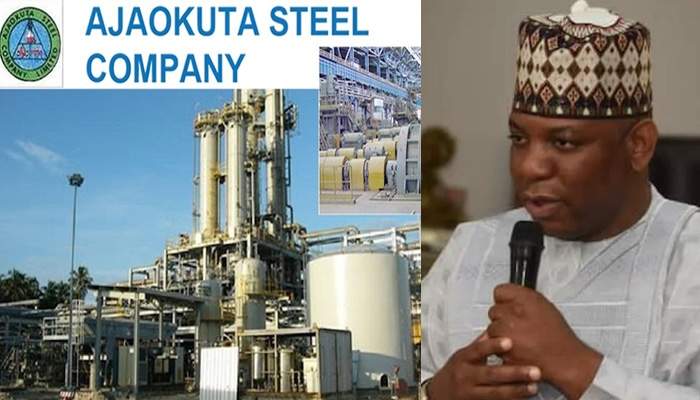
Nigeria’s decades-long steel dream is edging closer to revival as fresh momentum builds around a proposed $2 billion Chinese-backed plan to restore the long-idle Ajaokuta Steel Company in Kogi State.
Once envisioned as the backbone of Nigeria’s industrial revolution, the 42-year-old complex is now at the centre of a renewed strategy to reduce steel imports, strengthen local production, and reposition the country as a manufacturing powerhouse.
The revival blueprint, championed by Joseph Tegbe, Director-General of the Nigeria-China Strategic Partnership, adopts a production-sharing model with a preferred Chinese investor selected after negotiations with nearly ten firms. A team of about 20 Chinese engineers has already conducted a detailed technical audit of the facility at no cost to Nigeria. Their verdict: while much of the equipment is obsolete, the plant’s structural foundation remains solid enough for rehabilitation and expansion.
Commissioned in 1984 with a projected capacity of 1.3 million tonnes annually, Ajaokuta has remained largely dormant due to legal disputes, shifting policies, and funding setbacks. Meanwhile, Nigeria’s steel demand has soared to an estimated 10 million tonnes per year, far outpacing the roughly 1.2 million tonnes currently produced locally—mostly from scrap. The gap has translated into billions of dollars in imports, draining foreign exchange and stunting industrial growth.
Under the proposed arrangement, the Chinese partner will finance and execute the rehabilitation without direct budgetary allocation from Abuja. Funding is expected to pass through approval by China’s National Development and Reform Commission, with the investor recouping costs through an agreed share of production. Initially, the firm could retain 60 to 70 percent of output, a figure designed to taper off over time until Nigeria assumes full operational control.
Beyond steel production, talks also cover critical logistics infrastructure—particularly the rail corridor linking Warri Port through Itakpe to Ajaokuta—as well as road and inland waterway upgrades to ease the movement of raw materials and finished products. Concerns about iron ore quality have also been addressed, with officials noting that Nigeria’s deposits remain competitive and can be enhanced through beneficiation processes.
If regulatory clearances stay on track, rolling mill operations could resume between late 2026 and early 2027. The broader framework includes technology transfer and technical training for Nigerian engineers, signalling a long-term capacity-building agenda rather than a short-term fix.
The push to revive Ajaokuta aligns with a wider industrial vision under President Bola Ahmed Tinubu, including the creation of a 4,000-hectare Ajaokuta Economic City Free Trade Zone to attract investments in steel, mining, manufacturing, and logistics.
After more than four decades of stalled expectations, the latest effort represents one of the most structured and financially innovative attempts yet to breathe life into Nigeria’s most ambitious industrial project. If successful, Ajaokuta may finally transition from a symbol of unrealised potential to a catalyst for national industrial rebirth.