Tech, Inclusion, and Reforms Reshape Nigeria’s Market
Atume Terfa
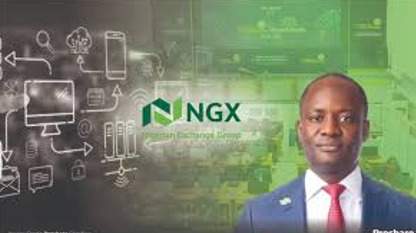
Nigeria’s capital market is entering a new era, driven by bold reforms, widening investor participation, and innovative technology, according to Temi Popoola, Group CEO of the Nigerian Exchange Group (NGX).
Speaking at the Pan-African Investment Lounge, Popoola described the market as rapidly consolidating its role as a gateway for structured investment into Africa, attracting both domestic and international capital.
Reflecting on the “challenging but necessary” adjustments of 2025, Popoola highlighted how macroeconomic and regulatory reforms have strengthened market fundamentals. Improvements in price discovery, transparency, and resilience are now creating a more robust platform for investors.
He noted that the NGX All-Share Index’s strong performance last year was driven by real corporate earnings and consistent dividends, rather than speculative activity — a clear signal of growing market maturity.
A striking shift in the market has been its increasing diversity of investors. Women and diaspora participants are playing a more prominent role, adding stability and long-term resilience. In a recent telecommunications public offer, women accounted for 76% of more than 110,000 new accounts, reflecting a structural change that Popoola says will shape disciplined, long-term investing.
“Women don’t just participate in markets; they stabilize them,” Popoola said, underscoring that inclusive engagement strengthens both investor confidence and capital depth.
Technology is also reshaping Nigeria’s capital market. Platforms like NGX Invest are enhancing access and transparency, simplifying participation in public offers and rights issues for investors across the country.
By narrowing participation gaps, especially among retail investors outside major financial centres, digital solutions are channeling domestic savings into productive investments, while increasing market efficiency and reliability.
Popoola identified five trends expected to shape Nigeria’s investment landscape this year:
Global geopolitical shifts creating new supply-chain opportunities.
Strengthened macroeconomic stability and improved GDP projections.
Renewed foreign portfolio inflows driven by transparency and attractive yields.
Closer coordination between fiscal and monetary policies.
Expanded asset utilization through new listings and infrastructure-linked instruments.
He also stressed the importance of strategic partnerships, sustainability initiatives, and targeted investor education to deepen market participation and build long-term confidence.
With reforms, inclusion, and technology at the forefront, Nigeria’s capital market is not just expanding — it is evolving into a more accessible, resilient, and technologically empowered investment hub for Africa.